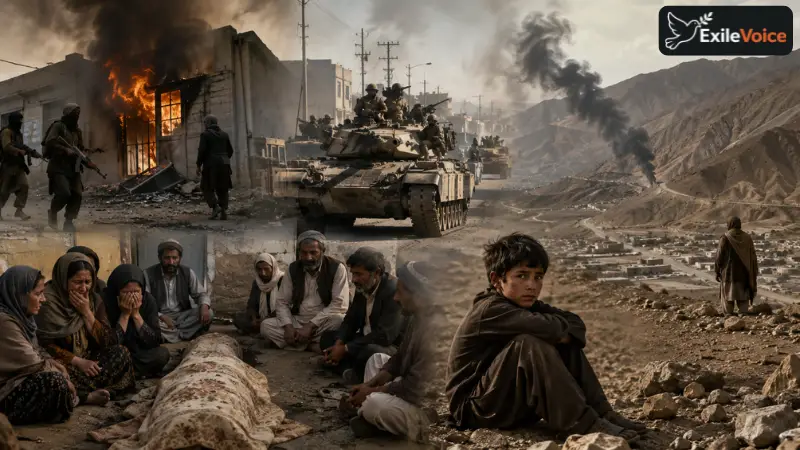
The security landscape in Balochistan has reached a critical juncture, characterized by intensified militant activities and a perceived collapse of governance. Recent developments include the Baloch Liberation Army (BLA) targeting critical infrastructure, such as burning a Muslim Commercial Bank branch and a police outpost in the Chagai district. These actions have effectively turned parts of the region into "no-go areas," paralyzing movement and disrupting local commerce.
The situation is further exacerbated by a profound crisis of confidence between the public and the state. Families of fallen police officers have refused to bury their deceased, protesting against the state's failure to provide timely assistance during attacks. Reports indicate that victims were left under fire for hours, some accounts suggest up to eight to ten hours, without reinforcements, despite pleas for help. This has sparked intense public debate regarding the accountability of military and intelligence leadership, including Corps Commanders and sector commanders, who are responsible for overseeing security operations in the province.
Critically, there is a disconnect between the state’s rhetoric and the reality on the ground. While leadership frequently pledges to use the full force of the state to curb terrorism, critics argue that these are "hollow statements" that fail to address systemic operational failures. The deployment of heavy military assets, such as tanks in residential areas, has been questioned for its effectiveness against a mobile, insurgency-style threat, often resulting in increased civilian fear rather than stability.
The discourse also highlights that the current civilian leadership in Balochistan is widely viewed as a proxy for the military establishment. If there are "governance gaps," it suggests a broader failure of the existing power structure rather than just individual provincial administrators. As the crisis deepens, there are growing calls for a transition to genuine civilian representation that can foster collaboration with local communities, which is argued to be a prerequisite for any effective counter-terrorism strategy.