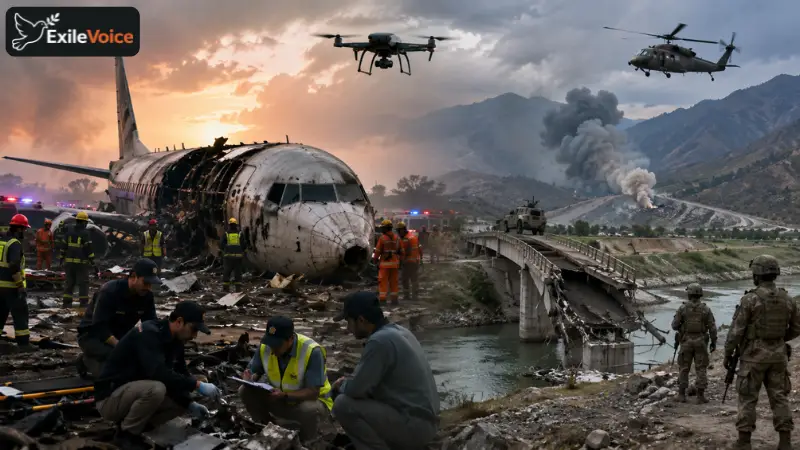
Recent events have highlighted significant concerns regarding both aviation safety and the security of critical infrastructure. A notable incident involving a Pakistan-registered 737 cargo plane, which crashed while en route from Sharjah to Karachi, has brought the focus back to operational safety and the critical need for robust emergency response frameworks. The rapid descent of the aircraft, as reported by tracking data, underscores the urgency of investigations into the root causes of such aviation disasters, which carry profound implications for the families of the crew and the aviation sector at large.
Parallel to these aviation concerns, the security of vital infrastructure, such as bridges on the China-Pakistan Economic Corridor (CPEC) route, remains a high-priority issue. The recent destruction of a bridge in the Bannu region by explosive materials serves as a stark reminder of the security threats facing development projects. The subsequent response, involving aerial monitoring, also highlights the collateral risks posed to local populations during counter-security operations. These events collectively emphasize the pressing need for comprehensive, non-military solutions to regional instabilities, as the reliance on force has frequently resulted in unintended consequences for civilians. Effective governance and security require a proactive approach that prioritizes the protection of both critical infrastructure and the safety of citizens, ensuring that development is not hampered by the threat of violence.