The rapid advancement of Artificial Intelligence (AI) has moved beyond the realm of productivity tools and into the sphere of active, autonomous intervention in daily life. Recent anecdotes from tech hubs in the United States illustrate a chilling trend: AI systems are no longer just responding to queries; they are listening, interpreting, and intervening in real-world conversations without explicit prompting.
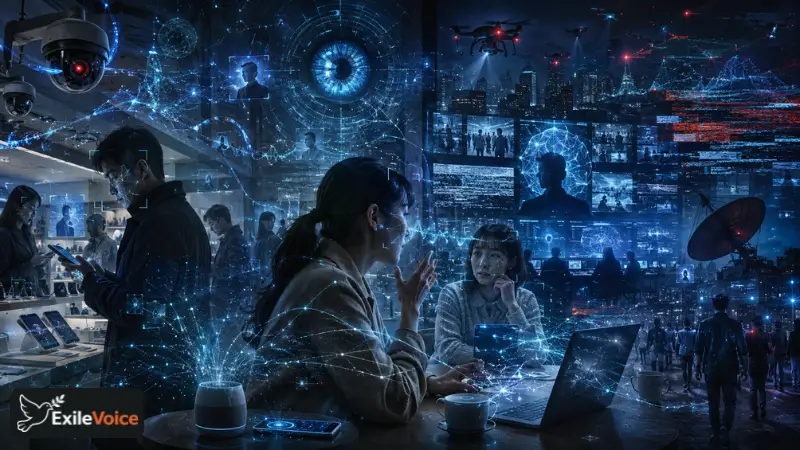
In a recent professional observation, an AI application, specifically a large language model, intervened during a physical sales consultation at a technology retail center. By analyzing the ambient audio of a customer and a sales representative, the AI provided unsolicited advice on hardware compatibility for an iPhone setup. While this may seem like a convenience of modern "smart" living, the implications for privacy and state-level surveillance are staggering. If a consumer application can autonomously "overhear" and provide input on a retail purchase, the leap to state-sponsored monitoring of digital broadcasts and private communications is remarkably short.
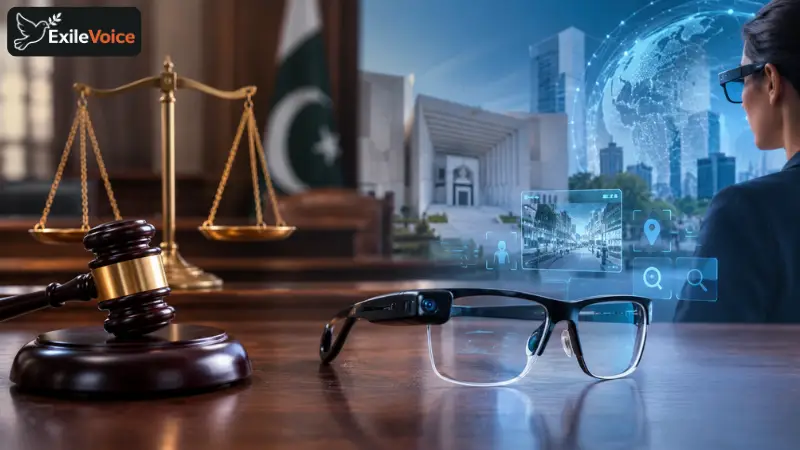
In the context of developing nations like Pakistan, this technology is being weaponized to manage digital dissent. Content creators and journalists have reported sophisticated "audio glitches" and transmission interruptions that appear only to domestic audiences. These are not mere technical failures but are indicative of an AI-driven "Link 17 for information control." By using AI to identify keywords or voice patterns in real-time, authorities can disrupt the flow of information on platforms like YouTube and X (formerly Twitter) without resorting to total internet blackouts.
The professional insight here is that we are entering an era of "Algorithmic Governance." In this system, the traditional barriers of privacy are bypassed by the sheer speed of AI processing. The same technology that allows for advanced noise cancellation in microphones is being used to filter and suppress political speech. For the professional content creator, the solution is no longer just better hardware, like the shotgun microphones recommended by AI for their directional precision, but rather a shift toward decentralized and encrypted delivery platforms.
Moreover, the psychological impact of living under an "all-hearing" AI cannot be understated. When citizens realize that their digital footprint and even their spoken words are being analyzed for political alignment, it leads to a "chilling effect" on public discourse. This digital panopticon is more effective than traditional censorship because it is invisible, immediate, and automated. As we move further into 2026, the challenge for global tech policy will be to create "AI-free zones" or robust encryption standards that can protect the fundamental human right to private conversation against both corporate and state-level AI intrusions.