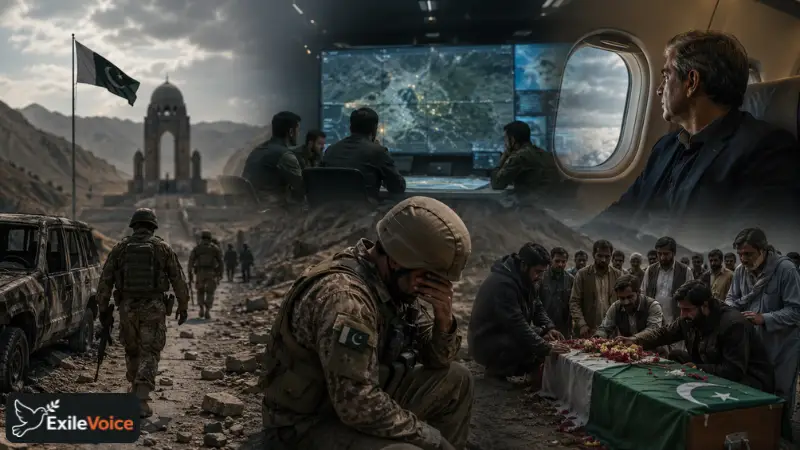
The recent security escalation in Balochistan has brought the efficacy of Pakistan's internal security governance into sharp focus. Following a series of devastating attacks on security personnel, questions have been raised regarding the presence and active leadership of top officials, specifically the Minister of Interior, Mohsin Naqvi. The incident in Ziarat, which resulted in the loss of lives of security personnel, has sparked a national debate about crisis management, strategic operational decision-making, and the perceived disconnect between political leadership and the grim realities on the ground.
Critics argue that during periods of extreme instability, where the very fabric of security infrastructure is challenged, the physical presence and oversight of the Interior Minister are essential. The delegation’s recent trip to the United States to attend international police conferences, while coinciding with these domestic security crises, has been highlighted as a point of significant concern. Observers suggest that rather than engaging in diplomatic and professional conferences abroad, there was an urgent requirement for a tactical "war room" or on-ground leadership presence in the affected regions.
Furthermore, the handling of the aftermath, specifically the difficulties faced by families of the deceased security personnel in securing ambulances and official assistance for proper burials, has intensified public anger. The narrative suggests that the logistical failures and bureaucratic hurdles not only hampered the dignity of the fallen but also exacerbated the feeling of neglect among the local populace in the most sensitive and strategically significant province.
The comparison drawn between the state’s reaction to these tragedies and the historical resilience of other nations, such as the American reverence for the history of the Alamo, underscores a growing demand for a shift in how Pakistan commemorates and addresses the sacrifices of its security personnel. True national pride, analysts argue, is forged through transparent accountability, proactive crisis response, and a genuine, visible commitment to the welfare of those defending the state.