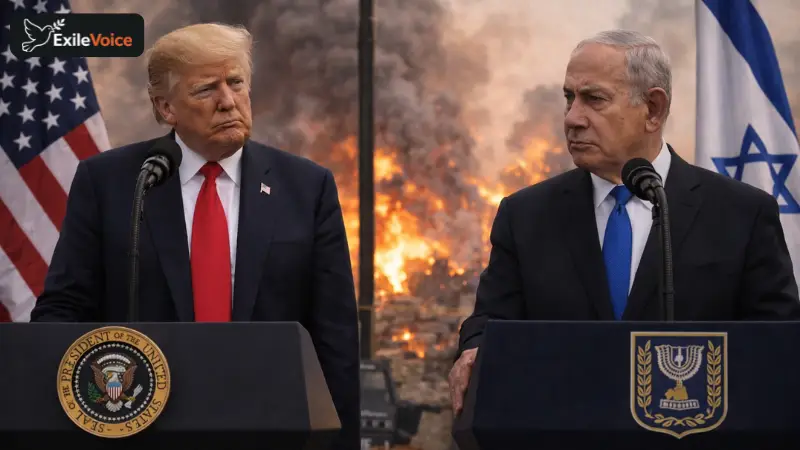
As the regional conflict reaches the three-week mark, a significant fracture has emerged in the traditionally ironclad alliance between the United States and Israel. What began as a unified front in the immediate aftermath of hostilities has devolved into a series of public disagreements and strategic misalignments. High-level intelligence assessments and diplomatic leaks suggest that the objectives of the Trump administration are increasingly at odds with those of the Netanyahu government, particularly regarding the scope and nature of military operations against Iranian infrastructure.
A pivotal moment occurred during a recent congressional hearing where the Director of National Intelligence, Tulsi Gabbard, was questioned regarding the alignment of U.S. and Israeli war goals. Her calculated pause and subsequent admission that the administration's objectives differ from those of its regional ally sent shockwaves through Washington. This admission confirms what many analysts had suspected: the U.S. is seeking a de-escalation path to protect global energy markets, while the Israeli leadership appears committed to a broader dismantling of Iranian nuclear and energy capabilities.
The friction is not merely rhetorical. President Trump has publicly signaled his disapproval of certain Israeli tactics, specifically the targeting of energy infrastructure that threatens to destabilize global oil and gas prices. The "America First" faction within the Republican party is increasingly vocal, arguing that the U.S. should not be drawn into a "trillion-dollar Israel-first tax" through massive military expenditures. With the Pentagon requesting an additional $200 billion to support operations, the domestic political cost of the war is becoming a primary concern for the White House.
Furthermore, internal dissent within the Trump administration has become visible. The resignation of prominent counter-terrorism officials, who argued that the U.S. was fighting for objectives that do not align with its own national security interests, highlights the depth of the rift. This strategic divergence is being exploited by Tehran, which has maintained a "zero restraint" policy if its critical infrastructure is targeted again. As the conflict enters its second month, the lack of a unified command structure and shared end-state between Washington and Tel Aviv threatens to prolong the instability.