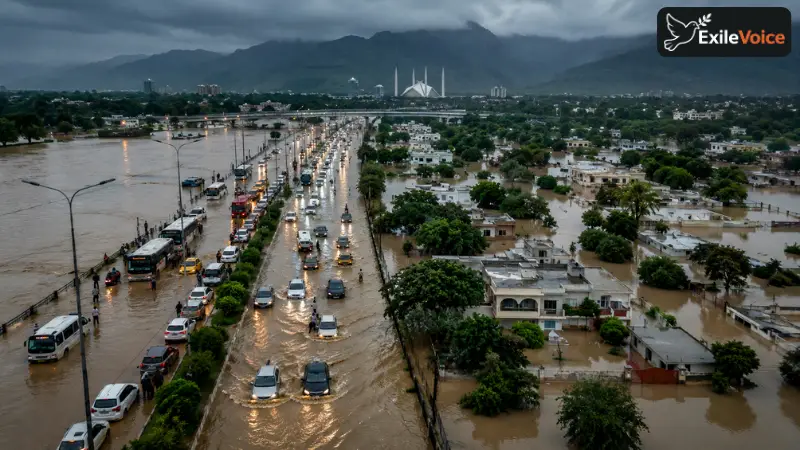
Recent severe monsoon weather patterns have brought immense challenges to urban infrastructure across South Asia, prominently highlighted by the catastrophic flooding in the twin cities of Islamabad and Rawalpindi. Torrential downpours overwhelmed local drainage systems, turning major roadways into rivers and inundating residential neighborhoods. This recurring crisis underscores an urgent need to reevaluate urban planning, stormwater management, and infrastructural preparedness to protect urban centers against extreme weather events.
Climate change has accelerated the frequency and intensity of unpredictable weather anomalies, testing the limits of legacy civil engineering designs. In densely populated urban zones like Rawalpindi, where rapid, often unregulated construction has encroached upon natural waterways and floodplains, the consequences of heavy precipitation are immediate and severe. Vital arteries connecting the twin cities experience severe gridlock, disrupting emergency services, daily commerce, and public safety. Addressing these vulnerabilities requires a paradigm shift from reactive disaster response to proactive, long term structural adaptation.
Effective urban resilience demands comprehensive investments in modernized drainage networks, regular desilting operations, and the strict enforcement of zoning laws along natural drainage basins such as Nullah Lai. Furthermore, city planners must integrate green infrastructure solutions, including permeable pavements and urban retention ponds, to absorb excess rainwater and mitigate surface runoff. Collaboration between federal, provincial, and local authorities is paramount to establishing robust early warning systems and coordinated emergency protocols. By prioritizing sustainable development and climate-adaptive engineering, municipalities can safeguard communities and minimize economic disruptions caused by extreme meteorological phenomena.