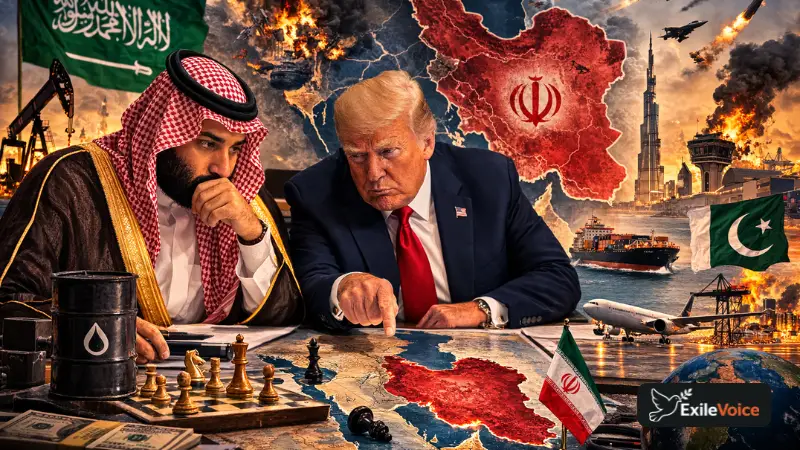
The geopolitical landscape of the Middle East is undergoing a tectonic shift as the conflict enters its third week. Beyond the immediate exchange of fire, a sophisticated and clandestine diplomatic architecture is being constructed, primarily linking Washington and Riyadh. In a revelation that has dominated international discourse, reports indicate that Saudi Crown Prince Mohammed bin Salman (MBS) has emerged as a critical, albeit silent, advisor to the Trump administration regarding the ongoing war with Iran.
This partnership represents a significant departure from traditional diplomatic channels. While the international community calls for restraint, the advice flowing from Riyadh to the White House is reportedly far more hawkish. The core of this strategy is the "decapitation" of the threat, often referred to in intelligence circles as "cutting off the head of the snake." By encouraging a more aggressive stance against Tehran, the Saudi leadership is positioning itself not just as a regional observer but as a primary architect of a new regional order.
The implications for the global energy market are immediate and severe. As infrastructure becomes the primary target, we are witnessing the unprecedented closure of major global hubs. The recent operational suspension at Dubai International Airport and other critical UAE port facilities marks a turning point where the war has moved from the battlefield to the global supply chain. This is no longer just a localized conflict; it is an infrastructural war that threatens the very movement of global commerce.
For Pakistan, the stakes are uniquely high. As a nation historically reliant on Saudi financial support, the "MBS-Trump" alliance places Islamabad in a precarious position. The pressure to align with this hawkish axis is mounting, even as domestic stability remains fragile. The so-called "Muslim Ummah" narrative is being tested as national interests and survival strategies take precedence over collective religious identity. As the U.S. Energy Secretary warns that the resolution of this conflict is nowhere in sight, the region must prepare for a long-term disruption that could redefine the global economy.