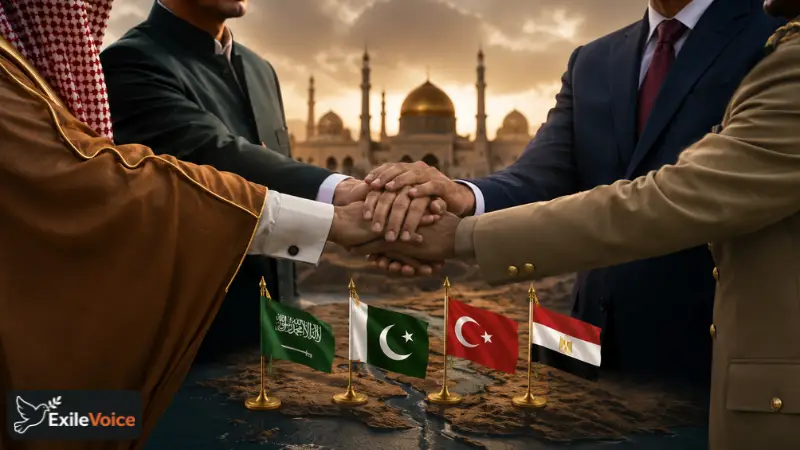
The geopolitical landscape of the Middle East is undergoing a significant transformation, marked by the formation of a nascent, informal coalition frequently referred to as the "Sunni Alliance" or an "Islamic NATO." Driven primarily by Saudi Arabia under the leadership of Crown Prince Mohammed bin Salman, this axis brings together key regional players, including Pakistan, Turkey, and Egypt. This development follows a period of heightened regional volatility and appears to be a direct response to the escalating conflict involving Iran and its proxies.
At its core, this alliance is fueled by a desperate need for enhanced security and deterrence. As traditional security umbrellas provided by Western powers, particularly the United States, appear to be withdrawing or becoming increasingly unreliable, regional states are forced to seek indigenous solutions. The alliance is structured around a mutual defense understanding, where members aim to integrate their military capabilities. Saudi Arabia provides the leadership and financial backing, leveraging its status in the Islamic world. Pakistan, as a formidable military and nuclear power, serves as a crucial partner in providing personnel and expertise. Turkey contributes advanced military-industrial capabilities, including sophisticated drone technology and defense infrastructure. Egypt, meanwhile, offers strategic geographic depth, bridging the gap between Europe and Africa.
The impetus for this alignment extends beyond countering a perceived threat; it reflects the deep-seated, historically rooted rivalries within the region, particularly between Saudi Arabia and Iran. Analysts suggest that while the initial branding of this coalition focused on the conflict with Israel, the underlying, long-term objective is to contain an increasingly assertive and confident Iran. Furthermore, the alliance highlights a cooling relationship between Saudi Arabia and the United Arab Emirates, indicating a fierce competition for regional economic and political dominance. As Saudi Arabia modernizes its economy and asserts its influence, the established balance of power is being fundamentally challenged, creating a vacuum that these regional powers are maneuvering to fill.