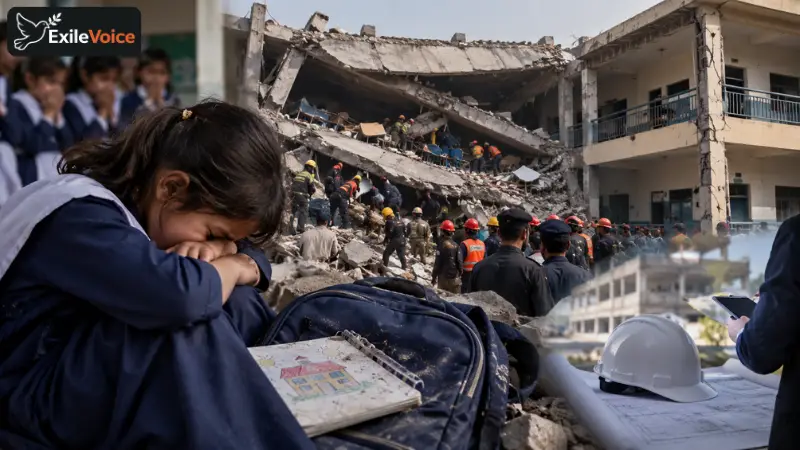
The tragic collapse of a private school roof in Peshawar, Khyber Pakhtunkhwa, resulting in the loss of nearly thirty young lives and multiple injuries, highlights critical systemic failures regarding structural safety, building standards, and institutional oversight in educational facilities. The double-story building reportedly utilized precast concrete structural elements rather than standard monolithic floor slabs, failing to meet fundamental engineering load requirements and construction specifications. When this makeshift structure failed, the resulting debris collapsed directly onto students aged five to thirteen, creating a catastrophic local disaster.
While structural collapses of educational and residential buildings have occurred across multiple provincial jurisdictions including Lahore, Layyah, Muzaffargarh, Multan, Sialkot, and Dera Ghazi Khan over recent years under various administrative setups, tragedies frequently trigger immediate political polarization rather than comprehensive safety reforms. Institutional responses often center on allocating political blame or directing public narratives to serve specific administrative agendas, overshadowing the urgent need for rigorous municipal building inspections, enforcement of architectural codes, and regular structural audits of private and public schools.
Addressing such infrastructure crises requires depoliticizing public safety and enforcing stringent building codes across all regions. Local governments must mandate certified engineering oversight for multi-story educational institutions, implement proactive structural testing, and hold negligent property owners and regulatory inspectors legally accountable. Only through sustained commitment to building integrity, transparent investigations, and rigorous safety compliance can communities prevent similar tragedies and protect children in educational environments.