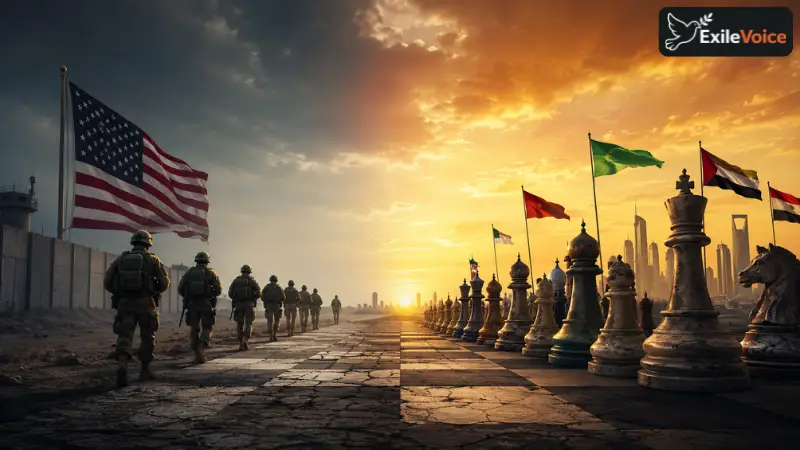
The Middle East is witnessing a transitional period often described as the "Post-American Gulf," characterized by a marked reduction in the traditional security dominance the United States has held in the region for decades. This shift is not merely a transient geopolitical fluctuation but a developing reality, particularly following recent conflict escalations and the complexities surrounding the upcoming U.S. election cycle.
For years, the U.S. maintained a vast network of military bases across the region, from Kuwait to Saudi Arabia, acting as the primary security guarantor. However, as the U.S. begins to retract its integrated air defense systems and interceptors, regional nations are experiencing a tangible erosion of the "security umbrella" they once relied upon. This withdrawal creates a geopolitical vacuum, compelling regional actors to take charge of their own defense architecture.
The frustration surrounding U.S. policy in the region is multifaceted. Iran, observing this shifting landscape, appears to be adopting a strategy of prolonged engagement to maximize pressure on U.S. political actors, particularly in the lead-up to the American elections. This strategy has put significant strain on U.S. leadership, contributing to domestic polarization and complicating diplomatic efforts. Simultaneously, the U.S. faces challenges in its relationship with regional allies who are now actively seeking alternative partnerships and defense integrations that do not depend on Washington’s direct involvement.
As America’s presence diminishes, the region is moving toward a more multipolar order. Regional powers are no longer waiting for U.S. initiatives but are instead building their own strategic alliances to address direct security threats. This shift signifies a fundamental change in the region’s long-term orientation, where the influence of external powers is being supplanted by local competition, cooperation, and the urgent need for autonomous regional stability.