
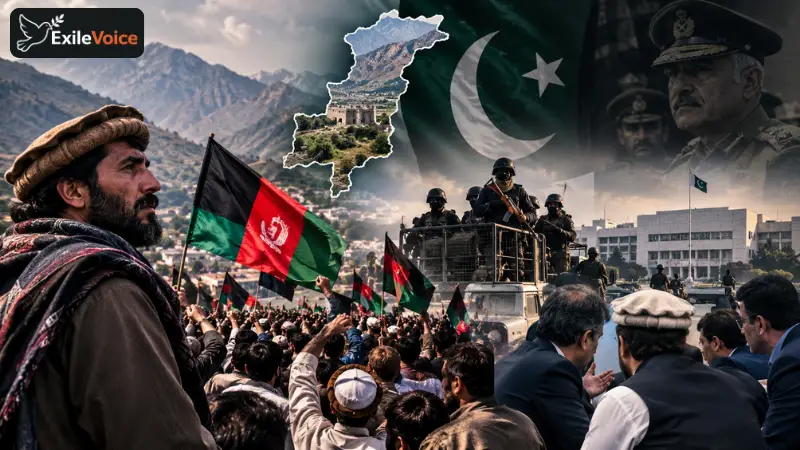
Recent political developments in Pakistan have highlighted an intensifying friction between regional leadership, civilian political forces, and federal authorities, with a particular focus on Khyber Pakhtunkhwa and the broader Pashtun belt. Observers note an escalation in administrative and security measures targeting opposition figures, parliamentary speakers, and regional political actors. Analysts suggest that these developments reflect deeper structural tensions regarding governance, accountability, and the representation of regional populations within national institutions.
Throughout the region, public demonstrations and protests have emerged in response to these administrative actions. While state authorities maintain that law and order operations are necessary to preserve stability, critics and regional commentators argue that these measures undermine democratic norms and deepen existing alienation. Furthermore, varying political factions across the Pashtun political spectrum, ranging from nationalist entities to mainstream opposition groups, are increasingly addressing shared concerns regarding security policy, resource management, and regional autonomy.
Discussions surrounding institutional representation have also gained prominence. Observers point to historical precedents and contemporary shifts in military and civilian command structures, noting that regional representation in high-level command positions remains a vital point of discussion among analysts of Pakistani politics. As public discourse continues to evolve, the intersection of regional identity, security governance, and political rights remains a central theme shaping the socio-political landscape of the country.