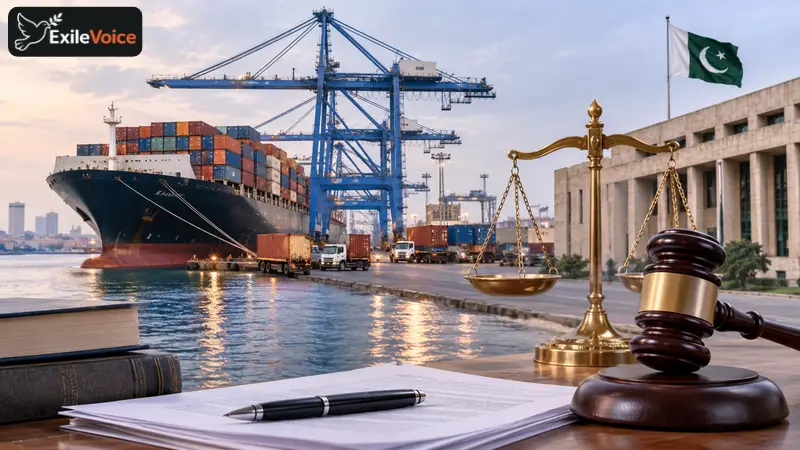


A decades old concession agreement governing a container terminal at Karachi Port has returned to the center of public accountability debates, spotlighting how port land allocations, contract amendments, and slow judicial and investigative processes affect national trade infrastructure. What began as a fixed term build and operate arrangement in the mid 1990s was later extended through an amendment in 2005, pushing the scheduled handover back by more than a decade. For maritime economists and governance analysts, the dispute illustrates the high financial stakes of port concessions and the cost of prolonged legal limbo.
Under the original framework established in 1996, foreign terminal operators were slated to construct and operate the facility for twenty one years before returning control to the Karachi Port Trust in 2017. In January 2005, following board approval and the signing of a revised arrangement during the tenure of then port chairman Vice Admiral retired Ahmad Hayat, the agreement was amended. According to investigative agencies and audit reviews, the modification expanded the land footprint by over one hundred twenty four thousand square meters without an open public auction and shifted the terminal's reversion date from 2017 to 2029.
Subsequent inquiries by the National Accountability Bureau and later the Federal Investigation Agency examined whether the terms underpriced public land, reduced royalty returns, and resulted in substantial financial loss or undue benefit over the extended operating period. High court proceedings over the years drew a sharp distinction between corporate participation and official decision making, excluding the operating company from criminal culpability in earlier rulings while keeping scrutiny focused on public asset management and institutional jurisdiction. Even as investigations moved between agencies and courts ruled on forum and procedure, active container operations at the terminal have continued uninterrupted.
For Pakistan's economy, port efficiency and transparent concession governance carry outsized importance. Karachi Port handles a massive share of national import, export, and transit trade, where cargo dwell times, tariff predictability, and berth capacity directly affect supply chain costs and consumer prices. When major infrastructure contracts remain mired in multi year inquiries without final adjudication, uncertainty clouds long term port planning and investor confidence.
Resolving disputes of this scale requires institutional clarity rather than prolonged stalemate. Clear audit standards, transparent public tendering for port and maritime assets, and timely judicial resolution are essential to protect state revenue while maintaining a stable, rules based environment for legitimate maritime operations and trade growth.