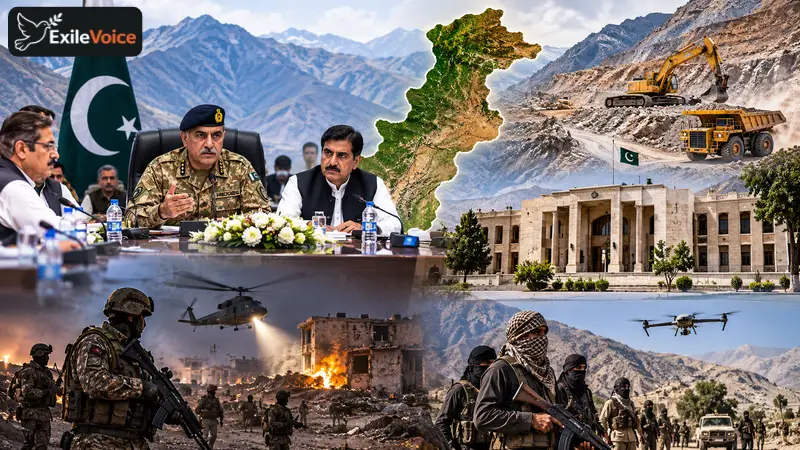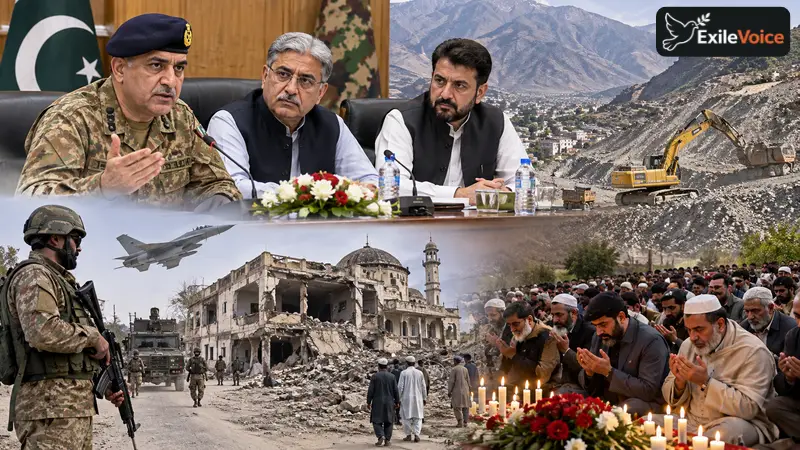

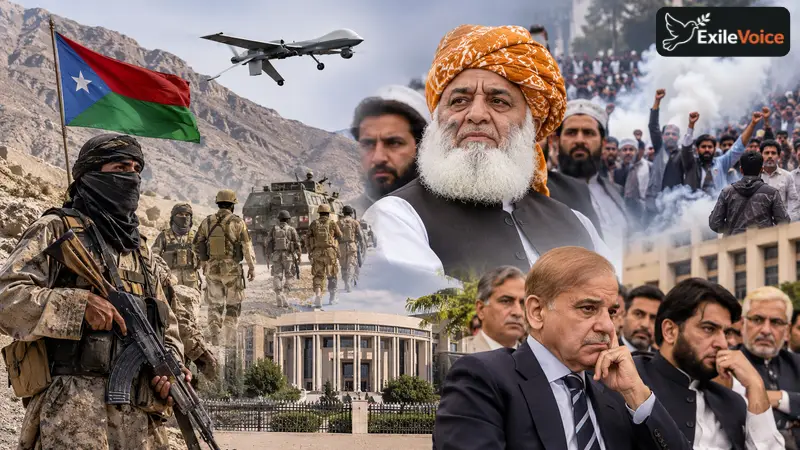
Security forces in Balochistan confront evolving militant tactics as insurgent groups release footage claiming coordinated attacks and drone strikes. Reports surrounding an assault claimed by the Balochistan Liberation Army on a security wing camp in the Hasda Hall area of Noshki district on November 21, 2026, highlight claims of heavy casualties and the use of first-person-view drones alongside ground fighters. While independent verification of casualty figures remains limited, the visible deployment of modern drone technology points to a growing operational challenge that requires adaptive defense, intelligence, and regional stabilization.
Beyond security fronts, political dynamics across Pakistan are shifting rapidly following protests, detentions, and competing narratives around opposition mobilization. Jamiat Ulema-e-Islam chief Maulana Fazlur Rahman faced movement restrictions and detentions involving Lahore and Sargodha ahead of planned gatherings on November 26, sparking conflicting accounts between party leaders and police officials over whether he was formally arrested or merely prevented from traveling. Protests and tear gas clashes also surfaced in Khyber Pakhtunkhwa even as provincial officials and rival political figures offered public expressions of solidarity over his treatment in Punjab.
Within opposition ranks and wider party circles, strategic disagreements are becoming more visible. Leaders and commentators debate whether to align closely with protest movements led by Fazlur Rahman, insist on clear political commitments first, or maintain strict adherence to party leadership directives on sensitive proposals such as referendums. Meanwhile, reports of compiled lists of technocrats and business figures, alongside speculation about party defections or future political setups, suggest intense behind-the-scenes maneuvering ahead of upcoming political cycles.
Public institutions and enforcement agencies also find themselves under close scrutiny over conduct and credibility. High-profile evening interactions and public warnings from cybercrime officials draw sharp criticism when critics argue they prioritize publicity over routine institutional work. In a climate marked by militant pressure, contested detentions, and fractured political alignments, public trust depends on consistent rule of law, transparent governance, and clear political accountability.