

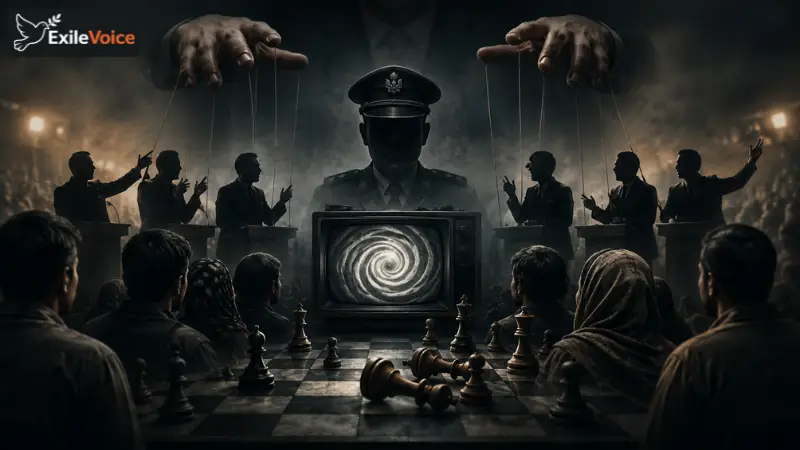
The role of media in shaping the political landscape of Pakistan has become increasingly significant, with analysts pointing to a symbiotic, yet problematic, relationship between political figures, media pundits, and the military establishment. The current environment is characterized by the dissemination of specific narratives that often lack foundational evidence but serve to manipulate public perception effectively. A primary example is the way certain pundits predict future political outcomes or interpret the actions of leaders, which often align closely with the interests of the establishment.
Pundits and political analysts are often seen as instruments of this media-political nexus. By presenting subjective predictions, such as claims about a leader's political future, the success of a party, or even the spiritual or "astrological" outcomes, they influence the morale of the public and the supporters of political parties. The analysis highlights that these narratives are not random; they are often coordinated to create a specific, desired environment. When a pundit predicts the dominance of a presidential system or the impossibility of a leader's return, they are contributing to an atmosphere of inevitability that can suppress dissent and discourage political participation.
A significant concern is the lack of accountability and factual verification in this process. Political figures often make contradictory statements, such as claiming their education from prestigious institutions while simultaneously asserting their origins from humble or elite backgrounds, which go largely unchallenged or are spun by media outlets to suit the narrative of the day. This creates a state of confusion among the public, making it difficult to discern the truth. The analysis suggests that the goal is not to inform but to distract and confuse, ensuring that the focus remains on the manipulated discourse rather than the underlying realities of power.
The use of religious and emotional imagery further compounds this issue. By invoking grand, sometimes vague, concepts of "national interest" or "long-term stability," proponents of these narratives justify actions that may be undemocratic. The media's role in amplifying these voices without scrutiny facilitates a system where the "truth" is whatever the establishment deems necessary at the time.
In conclusion, the Pakistani media landscape, as it relates to politics, is in a state of crisis. The reliance on pundits to drive public opinion, combined with the lack of rigorous fact-checking, allows for the pervasive influence of the establishment. To navigate this, the public is encouraged to maintain an internal locus of control and rely on factual, verified information rather than the speculative and often manipulative content presented by these pundits.

