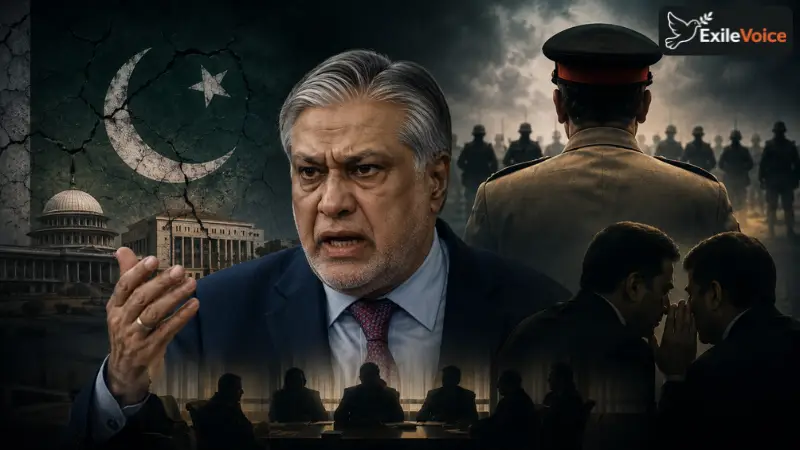
The political atmosphere in Pakistan has been thrust into chaos following the emergence of an audio leak involving Ishaq Dar, the country's Deputy Prime Minister and Foreign Minister. The leaked recording captures Dar in a candid and highly aggressive critique of the military leadership, specifically addressing the current Army Chief. The leak serves as a potent reminder of the internal tensions simmering within the ruling elite and the fragile nature of Pakistan's civil-military relations.
In the recording, Dar is heard expressing frustration regarding the public perception of the military leadership. He notes with alarm that the incumbent Army Chief is facing unprecedented levels of public criticism and verbal abuse, something he claims was unimaginable in the past. Dar’s comments suggest a deep-seated anxiety about the stability of the power structure. He reflects on his own past experiences and those of his party colleagues, lamenting the "betrayals" and hardships suffered during previous political cycles. He specifically references past figures like Shahid Khaqan Abbasi and Miftah Ismail, suggesting that the current political environment is defined by intense internal competition and a lack of trust.
The timing of this leak is critical. As the government grapples with economic challenges and public dissatisfaction, such internal discord poses a significant threat to its credibility. The leaked audio suggests that even those at the highest levels of government are deeply disillusioned or cautious about their alliances. Dar’s tone indicates that the survival of the current administration depends on delicate maneuvers, and any sign of dissent, or public exposure of that dissent, could trigger further instability.
For the public, this audio provides a rare, unvarnished look at the private discourse among political leaders. It strips away the facade of unity and reveals a landscape of suspicion and survival. Whether the audio is a recent recording or a relic from a previous administration, its impact is undeniable: it has fueled public skepticism and highlighted the deepening fissures within the establishment.
As the government attempts to suppress news of further scandals, such as those involving family members of high-ranking officials, the leak serves as a catalyst for deeper public scrutiny. The rhetoric used by figures like Dar, caught behind closed doors, often reveals more about the true nature of power in Pakistan than any official policy statement. The episode underscores a dangerous trend where political legitimacy is continuously eroded by internal conflicts, leaks, and a perceived disconnect between the rulers and the ruled.