The recent incident involving a reported attack on the General Headquarters (GHQ) in Pakistan has ignited significant controversy, with observers questioning the authenticity of the official narrative. Dr. Shahbaz Gill, in his analysis, highlights a series of procedural and logical inconsistencies that suggest the event may have been a "false flag" operation designed to serve a specific political agenda rather than a genuine security breach.
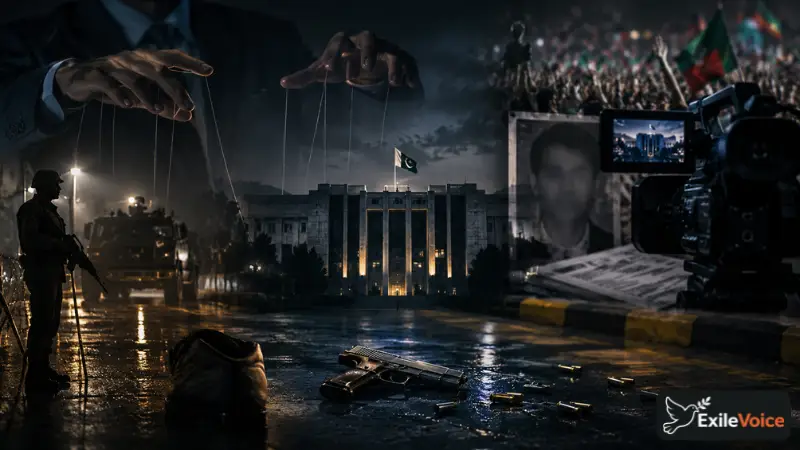
The narrative began with reports of an "unidentified" body found on a pavement in Rawalpindi, with no evidence of weaponry or political affiliation at the scene. However, within an hour, the story shifted dramatically. State-aligned media outlets began identifying the deceased as Muhammad Hussain, allegedly a highly active member of the Pakistan Tehreek-e-Insaf (PTI), claiming he had launched an attack on the GHQ. This shift in messaging, paired with the sudden appearance of evidence, such as a rusty pistol, a limited number of bullets, and political paraphernalia, has raised red flags among critics.
Professional analysts note that the speed and coordinated nature of the media response resemble past incidents where state institutions were accused of fabricating narratives to discredit opposition parties. Furthermore, the absence of verified CCTV footage, despite the high-security nature of the location, is a point of significant contention. Observers argue that the evidence presented seems staged, noting that the individual was found with personal documents, as if he were prepared for a bureaucratic task rather than a tactical assault.
The incident is currently being compared to previous events where state narratives regarding tragic deaths were later contested. By linking a deceased individual to the PTI, critics argue that the state is employing a tactic intended to delegitimize the political movement. While the PTI has formally requested a judicial inquiry to clarify the facts, the incident underscores the growing distrust between the public, mainstream media, and state security apparatuses in Pakistan. The strategic deployment of this narrative serves as a reminder of the complex information warfare currently characterizing the country's political landscape.