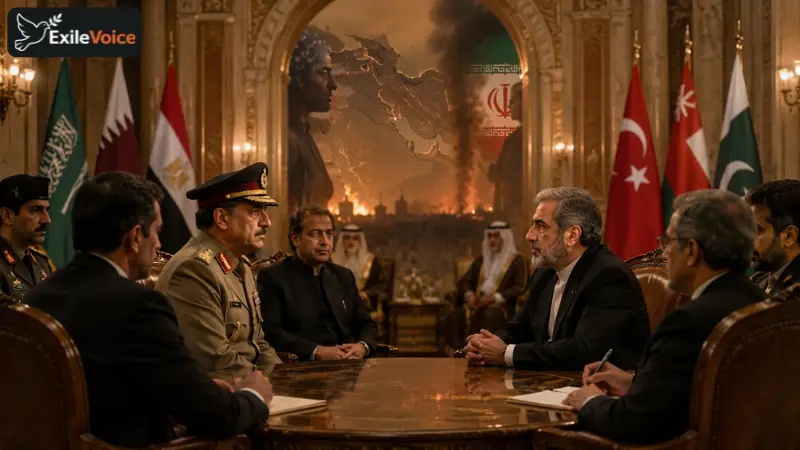
A critical diplomatic gamble unfolded in Tehran as Pakistan's Chief of Army Staff, General Asim Munir, embarked on a high-stakes mission to avert an imminent geopolitical conflagration in the Middle East. With regional tensions reaching a boiling point, Munir’s presence in the Iranian capital signals a coordinated backchannel effort involving a coalition of regional powers, including Saudi Arabia, Qatar, Egypt, Turkey, and Oman. The mission, described by observers as an agonizingly complex exercise in shuttle diplomacy, aims to broker an emergency framework between Tehran and Washington to de-escalate brewing military hostilities.
Unlike previous state visits characterized by public handshakes and media fanfare, this deployment is shrouded in strict operational secrecy. Key figures from Pakistan's security apparatus accompany General Munir, including the Director General of Inter-Services Intelligence, Lieutenant General Asim Malik, and Federal Minister Mohsin Naqvi. Naqvi reportedly established the groundwork for these deliberations through consecutive unpublicized trips to Tehran, engaging in direct talks with Iranian President Masoud Pezeshkian, Foreign Minister Abbas Araghchi, and senior commanders of the Islamic Revolutionary Guard Corps. The intense preparatory work highlights the gravity of the message delivered to the Iranian leadership on behalf of Western and Gulf intermediaries.
The core of the current impasse revolves around establishing a legally binding agreement. Sources close to the negotiations reveal that Iranian officials are demanding ironclad, written guarantees from Washington detailing a complete cessation of hostilities and a structured rollback of regional economic sanctions. Having witnessed the collapse of past international treaties, Tehran’s strategic posture is defined by a deep-seated distrust of unilateral verbal assurances. Conversely, American interlocutors remain hesitant to commit to sweeping written mandates, creating a tense stand-off over the precise language of the draft agreement.
Adding to the complexity of the mediation is a fundamental misalignment regarding the scope of the talks. While political figures in Washington continue to publicly assert that any long-term resolution must address Iran’s nuclear program, Iranian Foreign Minister Abbas Araghchi clarified that the nuclear dossier remains entirely separate from the immediate de-escalation framework. Tehran maintains that the current emergency talks must focus exclusively on security guarantees, regional sovereignty, and the prevention of imminent military strikes, leaving long-term strategic disputes for subsequent diplomatic forums.