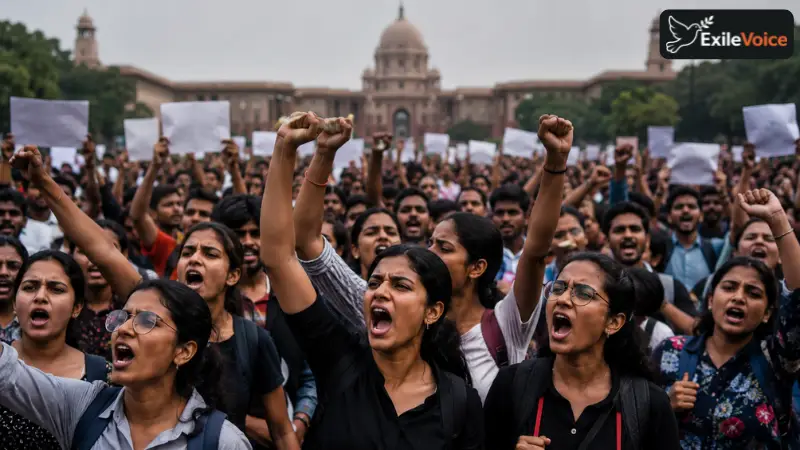
Political tensions in India have intensified as student demonstrations erupt across various cities following widespread anger over examination paper leaks, specifically involving the National Eligibility cum Entrance Test (NEET). The protests have drawn significant public participation, reflecting mounting frustrations among the youth regarding academic integrity, institutional transparency, and employment prospects.
In response to the growing unrest, Prime Minister Narendra Modi addressed the nation via video message and social media, assuring students that the government takes exam security and academic fairness very seriously. The administration has initiated administrative changes, replacing top-level federal education secretaries and senior officials to streamline accountability. Furthermore, environmental and educational activist Sonam Wangchuk suspended his hunger strike after receiving written assurances from government officials that peaceful protesters would not face legal retaliation unless violent acts were independently verified.
Despite these measures, opposition groups and student bodies continue to demand further political accountability, including the resignation of Union Education Minister Dharmendra Pradhan. Observers note that the vocal nature of these demonstrations highlights the dynamic, albeit noisy, character of India's democratic framework. This vibrant civic engagement stands in sharp contrast to more restrictive regional environments where public dissent and foundational civil liberties, such as long-term internet access suspensions, face severe state-imposed limitations.