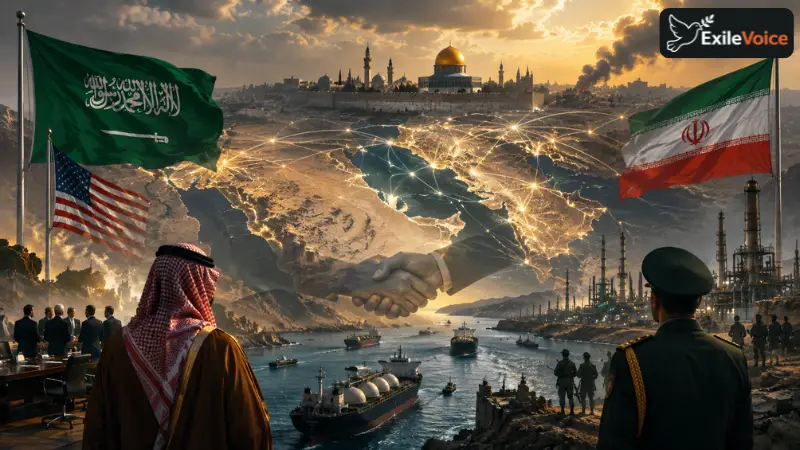
The geopolitical architecture of the Middle East is undergoing a profound and potentially permanent recalibration. According to intelligence briefings confirmed by major global diplomatic networks, Saudi Arabia has delivered a definitive ultimatum to Washington regarding its participation in the U.S. brokered Abraham Accords. Riyadh has officially frozen all normalization tracks with Tel Aviv, explicitly stating that no diplomatic recognition of Israel will occur without the formal establishment of an independent Palestinian state and the implementation of concrete, unalterable pathways toward a two state solution. This decisive posture signals a major shift in regional diplomacy and directly challenges the assumption that economic incentives and regional defense pacts could bypass foundational territorial disputes.
For years, international diplomats operated under the assumption that a grand bargain could be struck between Washington and Riyadh. The proposed framework intended to grant Saudi Arabia highly coveted civil nuclear capabilities and a historic, binding defense treaty with the United States in exchange for formal recognition of Israel. However, the escalating humanitarian crisis and prolonged military operations in the Gaza Strip have fundamentally altered Riyadh's calculations. By elevating Palestinian statehood from a secondary negotiating point to an absolute prerequisite, Saudi leadership is responding to intense pressure from the Arab street while recognizing that a regional security architecture built on unstable ground is unsustainable.
This strategic recalibration comes at a moment when traditional Western leverage in the region is facing unprecedented pressure. Analysts monitoring maritime choke points note that Western containment strategies have inadvertently strengthened alternative power centers. Military and defense experts analyzing data from major security networks acknowledge that Iran has successfully leveraged its geographic position to establish unprecedented influence over the Strait of Hormuz. The vital maritime corridor, which sees the passage of roughly one fifth of the world's petroleum liquids, is now being utilized as a powerful leverage point against Western economic sanctions.
The convergence of Saudi diplomatic resistance and expanding Iranian maritime influence indicates that the traditional security frameworks in the Middle East are losing their effectiveness. Washington's strategy of trying to isolate regional conflicts while pushing for normalization agreements has hit a wall. For international trade and global energy markets, this deadlock means that the political risk premium associated with the Persian Gulf will remain elevated for the foreseeable future.
The economic fallout of this diplomatic impasse extends far beyond diplomatic circles. International energy conglomerates and shipping networks must now plan for a long period of instability. As Saudi Arabia holds its ground on Palestinian sovereignty and global shipping routes face continuous pressure, the international community must confront a clear reality. True regional integration and economic stability in the Middle East cannot be achieved through short term security pacts that ignore core historical conflicts. Instead, future stability requires a comprehensive approach to territorial rights and a recognition of changing regional power dynamics.