

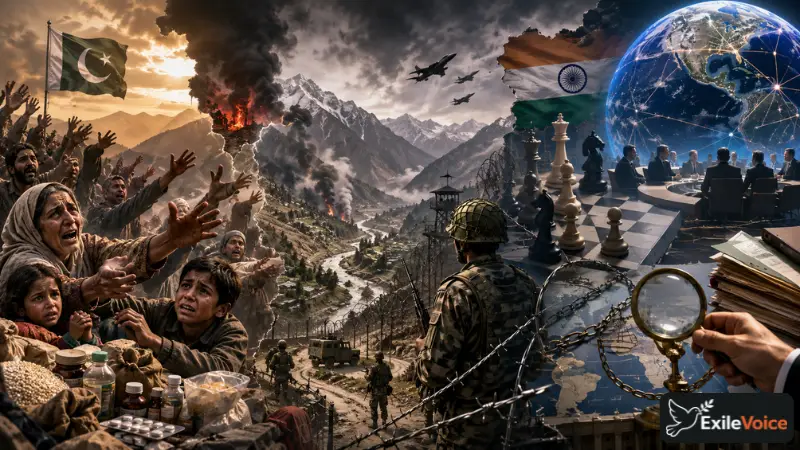
The current situation in Kashmir has reached a critical juncture, marked by unprecedented appeals for assistance from Azad Kashmir to the residents of the Indian-administered regions of Rajouri, Poonch, and Doda. Reports highlight a severe shortage of essential supplies, including food and medicine, in these areas, describing the region as effectively "under siege." Historically, the strategy of a siege has been employed to weaken resistance when direct control or conquest is unattainable, and current developments suggest this narrative is being actively discussed within the region.
The situation is further complicated by new, large-scale reports emerging from India that implicate figures like Hafiz Saeed in the monitoring and planning of cross-border attacks. These allegations are documented in comprehensive charge sheets spanning over 1,500 pages. While some domestic observers in Pakistan may dismiss these reports as outdated or strategically timed to influence international forums, their impact on multilateral platforms such as the United Nations and the Financial Action Task Force (FATF) cannot be ignored. The potential for Pakistan to be re-evaluated for the FATF gray list remains a persistent concern, as seen in past diplomatic and economic challenges.
Furthermore, the involvement of international think tanks and influential figures in shaping the narrative around the Kashmir issue underscores the need for a sophisticated and strategic response. The interconnection between water management, regional security, and national ideology makes this a delicate matter. There is an increasing realization that moving forward requires a direct and meaningful dialogue with the people of Kashmir, rather than relying solely on past narratives or conventional methods of engagement. The ongoing regional instability and the perceived "overreach" of state institutions in handling these sensitive issues demand a shift toward more transparent and inclusive policies to address the humanitarian and security concerns effectively.

