

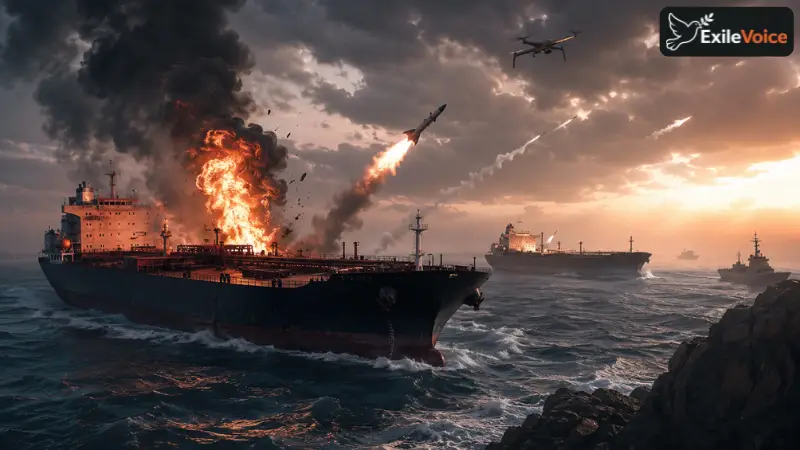
The geopolitical landscape in the Middle East has experienced a severe escalation as Houthi forces formally claimed responsibility for precision strikes against two Saudi oil tankers, the Ansellia and the Laila, near the Bab al Mandab strait in the Red Sea. Official Saudi confirmation verified that at least one of these tankers suffered disabling damage, though rescue operations successfully evacuated the crew without casualties. The attacks were executed using advanced weaponry, including cruise missiles, ballistic missiles, and drones, marking a significant intensification of hostilities that directly threatens international energy corridors.
This development brings severe implications for global energy security and shipping logistics. The Bab al Mandab strait serves as a critical bottleneck for maritime trade. With maritime traffic through the southern route facing imminent disruption, petroleum exporters are forced to consider alternative pathways, such as the Suez Mediterranean pipeline, which introduces logistical bottlenecks and increases operational costs. Furthermore, nations heavily reliant on Middle Eastern energy imports, including China, Japan, and South Korea, face heightened vulnerabilities as supply chains experience prolonged instability.
Diplomatic reactions have highlighted deep regional divisions. Following the incident, Pakistani leadership engaged in high-level communications with Saudi authorities, condemning the attacks as unacceptable and signaling a robust defense of allied strategic interests. Concurrently, United States Central Command continued its targeted operations across various urban and coastal regions in Iran, reflecting a sustained campaign to degrade regional proxy capabilities. As military engagements persist, the economic and security ramifications across the Red Sea and surrounding corridors continue to amplify global anxieties.

