

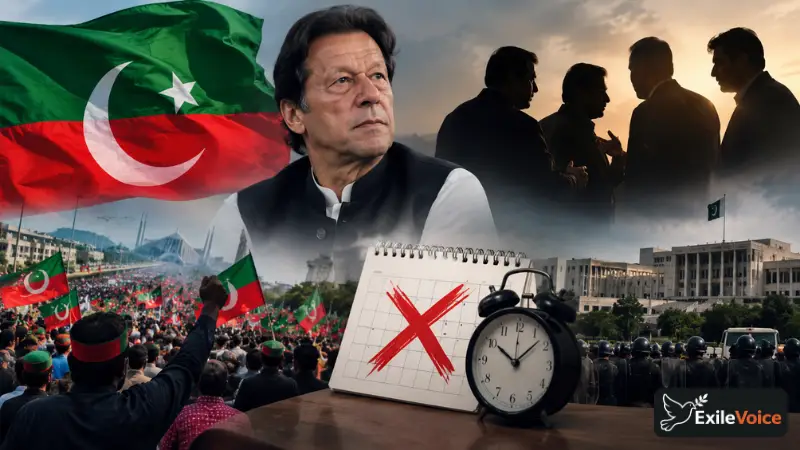
The decision by Pakistan Tehreek-e-Insaf (PTI) to postpone its planned Long March represents a major pivot in the current political landscape of Pakistan. For weeks, political analysts, media observers, and citizens alike anticipated a high-stakes street demonstration aimed at pressuring the ruling coalition and challenging the status quo. However, the unexpected delay reveals a complex tapestry of internal party dynamics, strategic recalculations, and intense behind-the-scenes maneuvering.
Street power has long served as PTI's primary leverage against incumbent governments. The Long March was slated to mobilize thousands across key urban centers, converging on major administrative hubs to demand administrative concessions and political relief for incarcerated party leadership, most notably Imran Khan.
Postponing such a high-profile agitation campaign carries significant psychological and tactical consequences. On one hand, deferring the movement risks dampening the enthusiasm of cadres and grassroots supporters who had been prepared for immediate action. On the other hand, executing a mass march without absolute organizational cohesion and full legal safeguards risks high suppression from state law enforcement agencies.
Political strategists within the movement appear to be balancing two major concerns: the threat of widespread arrests and state crackdowns versus the danger of losing momentum. The deferral highlights a deliberate choice to preserve political capital and regroup rather than engage in an ill-prepared confrontation that could result in structural damage to the party's regional networks.
Simultaneously, reports regarding potential organizational changes, such as the targeted removal or repositioning of prominent key figures like Sohail Afridi, point to significant internal friction. In political movements operating under high state pressure, leadership changes are rarely purely administrative. They often reflect deeper disagreements over tactical direction, resource allocation, and negotiation postures with establishment actors.
Factionalism frequently emerges when a political party is forced to operate under intense opposition status. One faction within the leadership typically favors uncompromising confrontation through immediate street protests, believing that relentless public pressure is the only mechanism capable of forcing concessions. Conversely, a more pragmatic faction often advocates for measured diplomatic outreach, legal challenges, and strategic patience, fearing that premature street action could exhaust resources or trigger stringent administrative measures, such as the imposition of central governor's rule in key provinces like Khyber Pakhtunkhwa.
PTI's governance in Khyber Pakhtunkhwa creates a unique structural dilemma. Holding executive power in a major province provides the party with substantial administrative resources, official platforms, and operational depth. However, it also exposes the party leadership to federal countermeasures. The central government retains significant constitutional levers, including financial controls and constitutional security provisions that can disrupt provincial administration.
The postponement of the Long March reflects this delicate balance. Using provincial state machinery directly to facilitate federal protest marches invites aggressive federal retaliation, potentially jeopardizing the stability of the provincial government itself. By delaying the street campaign, provincial leadership gains time to fortify its legal defenses, consolidate administrative control, and insulate regional governance structures from central fallout.
The postponement should not be interpreted simply as a complete retreat. Historically, political parties in Pakistan use tactical delays to renegotiate terms, test state responsiveness, and gauge international and domestic reactions. The coming weeks will determine whether this decision allows PTI to re-organize into a more unified, resilient force or whether internal divisions will further delay its political resistance.

