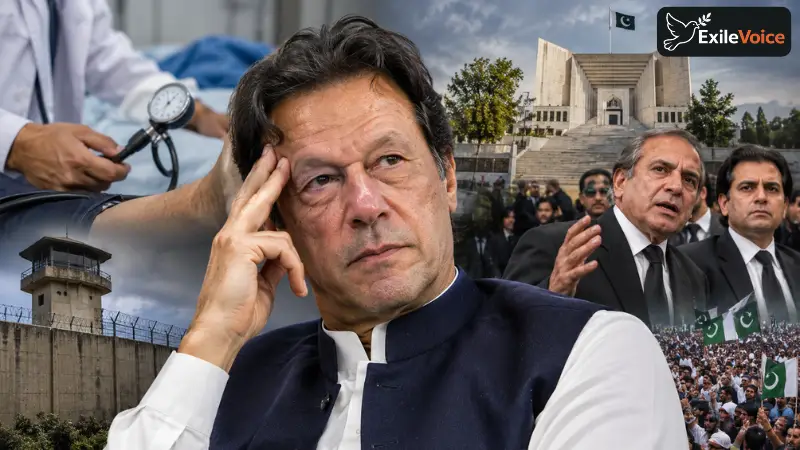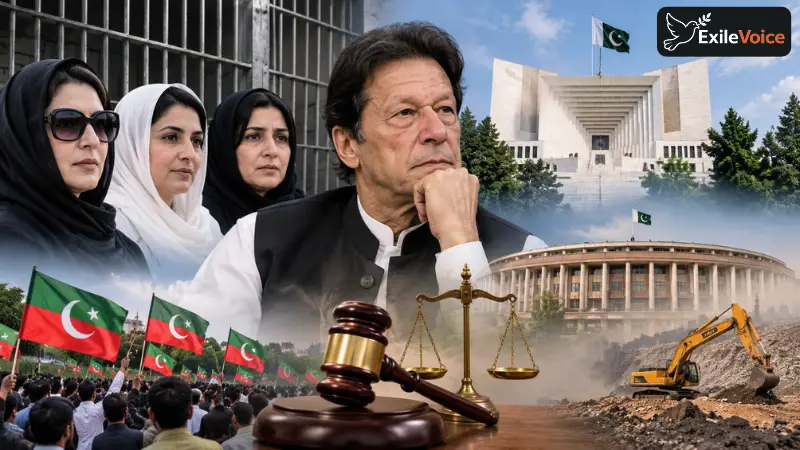

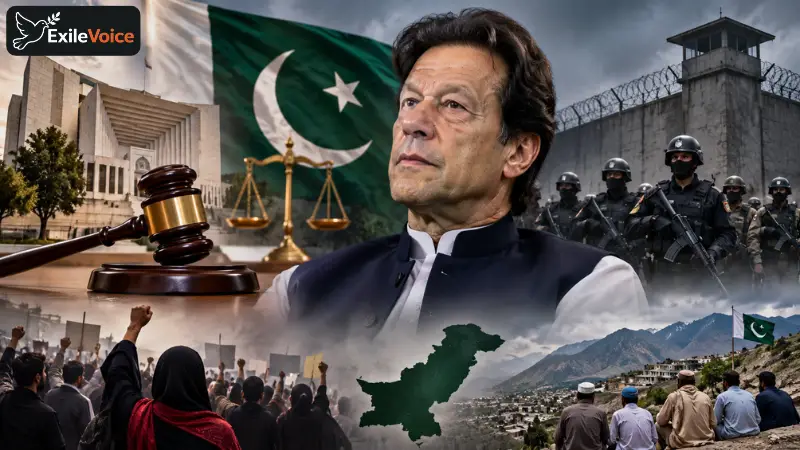
The current political and judicial landscape in Pakistan continues to experience deep friction marked by high profile legal disputes, institutional overreach, and mounting public dissent. Recent developments highlight the growing divide between state authorities and political opposition figures, with courts and security apparatuses remaining central to the unfolding crisis.
At the center of these developments are ongoing concerns regarding the treatment and legal status of imprisoned political leaders, most notably former Prime Minister Imran Khan. Reports regarding medical interventions and hospital visits have sparked intense debate and skepticism among legal teams and supporters, who question the transparency of official medical bulletins issued by state institutions. Independent observers and political analysts frequently highlight discrepancies in how medical boards are constituted and how reports are publicized, underscoring a broader erosion of trust in state-managed administrative and judicial processes.
Simultaneously, the legal harassment and detention of activists, journalists, and family members of prominent political figures have intensified. Incidents involving the apprehension of relatives of human rights defenders and political commentators reflect a systematic effort to suppress dissent and muzzle independent expression. Legal analysts note that arbitrary detentions, restrictive FIRs, and the weaponization of cybercrime and security regulations have created an environment of widespread apprehension across multiple provinces.
The role of the judiciary remains a subject of intense controversy. Recent commentary from senior legal experts and public figures points to selective justice, where procedural fairness appears contingent upon political alignment. Public outrage has been fueled by stark disparities in how high profile legal cases are handled compared to ordinary citizens or affiliated figures, leading to erosion of public confidence in the rule of law. Furthermore, regional sentiments, particularly in areas like Azad Kashmir and Balochistan, have shown signs of severe alienation, driven by aggressive security measures and a widening disconnect between regional populations and central state authorities.
Ultimately, these compounding pressures illustrate an escalating governance crisis. Observers emphasize that restoring institutional integrity will require adherence to constitutional norms, transparent judicial proceedings, and an immediate cessation of politically motivated coercive measures against civil society.