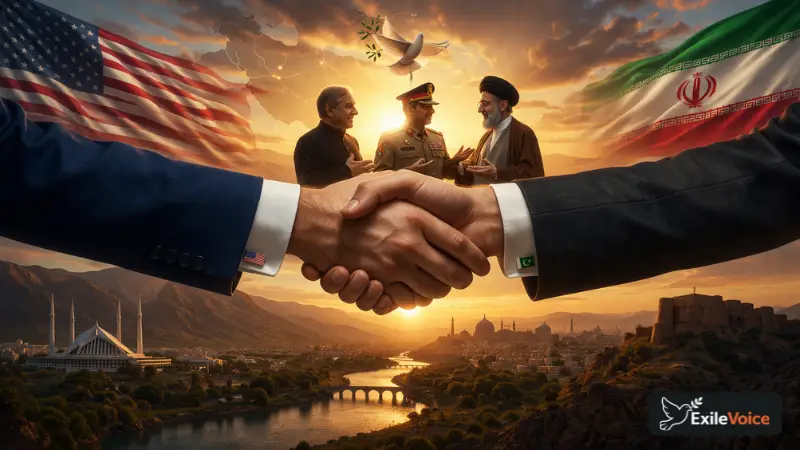
Pakistan is increasingly positioning itself as a central facilitator in the complex geopolitical landscape of the Middle East, specifically attempting to bridge the gap between the United States and Iran. Following recent high-level communications, Prime Minister Shehbaz Sharif and Chief of Army Staff General Asim Munir have activated a dual-track diplomacy strategy. While the civilian leadership engages with Tehran, the military establishment is leveraging its long-standing relationship with Washington to carve out a role as a "peace broker."
The timing of this diplomatic surge is significant. With the return of Donald Trump to the American political foreground, Pakistan is banking on personal and institutional ties to remain relevant in a shifting global order. Reports suggest that General Asim Munir has been in contact with figures close to the Trump administration, while Prime Minister Sharif has communicated directly with the Iranian leadership to offer Islamabad’s "constructive role" in advancing regional peace. The Iranian Foreign Ministry has acknowledged receiving messages from "friendly countries," hinting that the U.S. may be seeking a backchannel for negotiations to end ongoing conflicts.
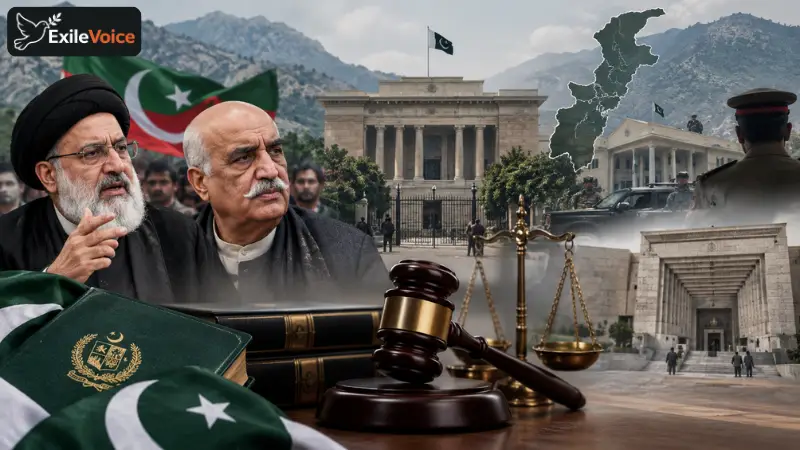
However, Pakistan’s role is fraught with internal and external contradictions. Domestically, the military’s heavy hand in politics, often referred to by critics as the "hybrid regime", undermines the democratic legitimacy required to represent a united front on the international stage. Externally, the arrival of Steve Witkoff, a close associate of Donald Trump, in Pakistan signals a pragmatic, business-first approach from the U.S. side. The challenge for Islamabad is to prove that it can offer more than just a geographic corridor; it must show that it possesses the political capital to influence Tehran while maintaining the trust of a transactional U.S. administration.
Historically, Pakistan has served as a bridge between the West and the Muslim world, most notably facilitating the 1971 opening of China for the Nixon administration. Today, the stakes involve avoiding a broader regional war that could destabilize Pakistan’s own fragile economy. By hosting peace dialogues, Pakistan hopes to alleviate international pressure regarding its internal human rights record and economic dependencies. Professional insights suggest that if Islamabad successfully facilitates even a minor de-escalation between the U.S. and Iran, it could secure much-needed financial and political concessions from the West.