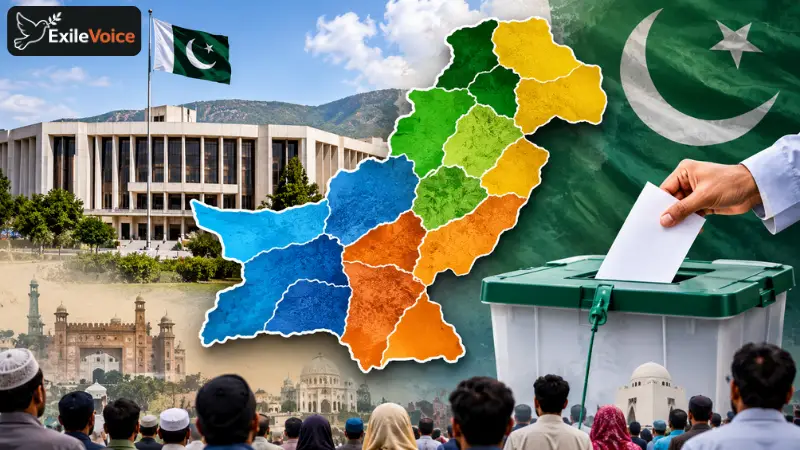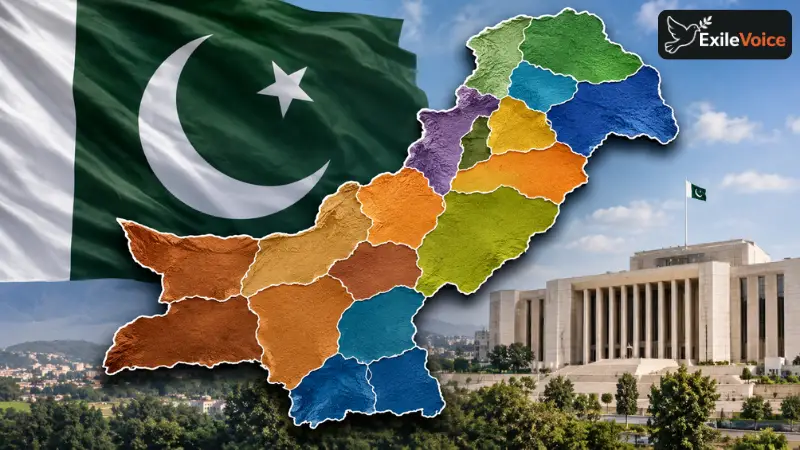
Political and administrative structures in Pakistan are facing a major potential restructuring as discussions emerge regarding the division of the country into 12 distinct administrative units. According to investigative reports and reports attributed to sources within key establishments, this proposed bureaucratic and territorial mapping is being considered ahead of a potential 28th constitutional amendment, with initial implementation steps targeted for the early part of 2027.
The proposed administrative blueprint outlines a radical decentralization of current provincial borders. Under this framework, Punjab, historically the demographic and political heavyweight, could be divided into four separate administrative regions. These would encompass a southern region focused around Bahawalpur, Multan, and Dera Ghazi Khan; a central or capital-adjacent zone incorporating areas like Attock, Jhelum, Gujarkhan, and the Islamabad Federal Territory; a core central zone around Lahore and surrounding industrial and agricultural hubs like Gujranwala, Sialkot, and Faisalabad; and central agricultural tracts around Sahiwal.
Meanwhile, Khyber Pakhtunkhwa (KP) is envisioned to be split into three distinct zones. These include a tribal belt mirroring former Federally Administered Tribal Areas (FATA) configurations, a central Peshawar valley zone covering settled districts such as Nowshera, Charsadda, Mardan, Kohat, and Bannu, and a northern mountainous tract incorporating Hazara and Malakand divisions.
Balochistan, which constitutes nearly half of Pakistan's total landmass, is similarly mapped into three distinct operational and administrative sectors. These correspond closely to current security and Frontier Corps (FC) jurisdictional divisions: a northern Pashtun-majority belt encompassing areas like Zhob, Loralai, Quetta, and Chaman; a western and southern insurgent zone incorporating coastal and border corridors; and an eastern tribal/sardar-influenced sector. In Sindh, the proposed restructuring contemplates dividing the province into two major economic zones, separating the urban and commercial powerhouse of Karachi and Hyderabad from the interior agrarian districts.
Analysts note that while certain divisions, particularly in economic centers like Sindh and parts of Punjab, are framed around political-economy and administrative efficiency, others reflect deep-seated security and counter-insurgency imperatives in western frontier regions. The long-term viability, political consensus, and legislative pathways for these sweeping territorial changes remain subjects of intense public and institutional debate as 2027 approaches.