

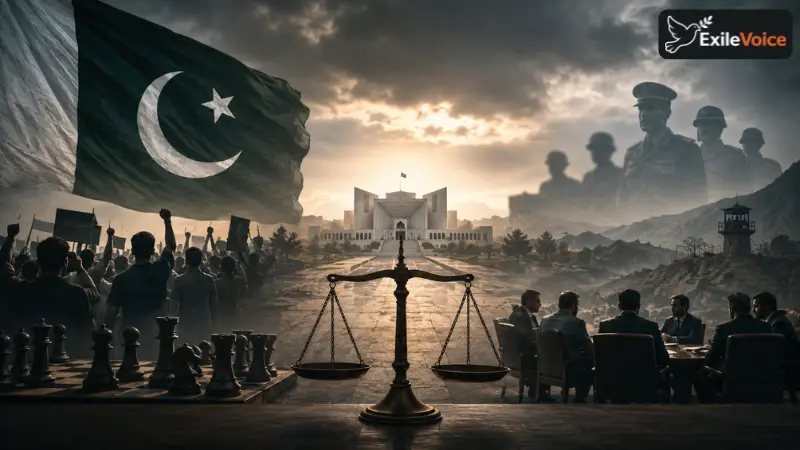
Pakistan's political arena continues to experience profound structural challenges, marked by intense polarization, administrative controversies, and debates over civil military relations. Observers frequently highlight the complex interplay between institutional authorities and political entities, noting how governance decisions often reflect broader systemic friction.
Recent debates have also focused on the role of political activists, student organizations, and civil society advocates in shaping national discourse. While various movements demand accountability and institutional reforms, critics point to selective advocacy and institutional inconsistencies as major hurdles to sustainable democratic progress. Additionally, regional administrative bodies, such as those in Khyber Pakhtunkhwa, face ongoing security challenges and complex policy coordination issues with federal authorities.
Political analysts stress that meaningful reform requires adherence to the rule of law, constitutional transparency, and genuine political dialogue. Without addressing core systemic grievances, political instability threatens to persist, impacting both governance efficiency and public trust in state institution.

