

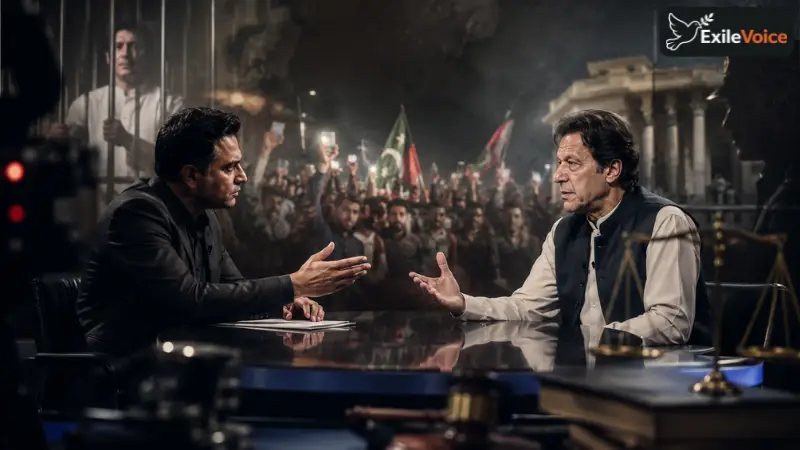
Media interviews involving prominent political figures frequently serve as battlegrounds for conflicting narratives, accountability, and public perception. Recent media interactions featuring political leaders have sparked widespread debate regarding the state of governance, political victimization, and the historical context of detentions in Pakistan. Critics have pointed out instances where interviewers and politicians alike engage in discourse that either challenges or reinforces prevailing power structures, leading to significant public scrutiny.
The discourse often touches upon historical comparisons of political imprisonment, treatment of political workers, and the consistency of democratic principles across different eras. Discussions surrounding jail conditions, the treatment of political figures, and the validity of legal cases against opposition members form a core component of contemporary political commentary. Furthermore, the role of media pundits and interviewers in either challenging powerful narratives or facilitating specific political alignments remains a subject of intense critique among analysts.
As public discourse continues to evolve, questions regarding institutional overreach, freedom of speech, and the boundaries of political dissent are increasingly brought to the forefront. The intersection of media representation and political strategy highlights the ongoing struggle for narrative control in a polarized political environment, where every interview and public statement is scrutinized for its underlying political implications.

