A burgeoning wave of youth-led agitation in India has escalated into a pivotal domestic crisis, bringing high-stakes entrance examination security, institutional transparency, and state response under intense national scrutiny. At the core of the uprising is widespread outrage over recurring paper leaks in the National Eligibility cum Entrance Test (NEET), a mandatory examination determining admission for roughly two million prospective students competing for approximately 100,000 medical and technical seats nationwide. For millions of middle-class and working-class families across India, NEET represents the primary gateway to socio-economic mobility. Consequently, repeated allegations of compromised question papers, administrative irregularities, and institutional delays have sparked profound frustration among students and young jobseekers.
The movement initially gained momentum through digital platforms, where young citizens organized community pages and satirical campaigns to challenge derogatory political rhetoric surrounding youth lethargy. What began as online advocacy rapidly converted into physical mobilization as prominent educational activists, philanthropists, and public intellectuals joined student groups at historical protest venues such as Delhi's Jantar Mantar. The prolonged hunger strikes by prominent educators drew national media focus, transforming localized academic grievances into a widespread civil movement.
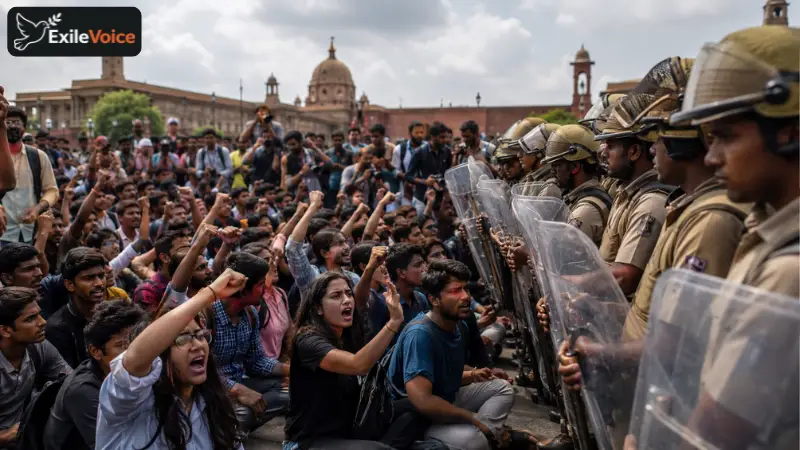
As the physical demonstrations expanded toward parliamentary precincts, clashes between law enforcement authorities and student demonstrators intensified. Reports and viral digital documentations highlighting police heavy-handedness, administrative detentions, and aggressive crowd dispersion methods at central demonstration points sparked broad outrage. High-density protests in urban centers revealed growing friction between law enforcement and young citizens, with human rights advocates and legal experts raising questions regarding proportional police response and the protection of constitutional peaceful assembly rights.
The escalating confrontation triggered significant engagement from India's civil society, prominent cultural figures, and political leaders. Senior entertainment figures, veteran actors, and public icons, including Salman Khan, Naseeruddin Shah, and Shabana Azmi, voiced solidarity with student demands for structural examination reforms. Public statements from renowned artists underlined the necessity of safeguarding youth aspirations and ensuring that state institutions remain accountable to meritocratic principles rather than administrative expediency. Similarly, opposition political leadership utilized the platform to critique administrative governance, demanding legislative oversight and comprehensive overhauls of centralized testing agencies.
Beyond political commentary, the physical protest sites showcased notable community coordination and civil solidarity. Local support networks, citizen groups, and regional organizations dispatched relief supplies, food, and temporary shelter arrangements to sustain demonstrators. Urban observers noted that the movement temporarily bridged traditional social and economic divides, unifying youth across diverse backgrounds under a shared demand for meritocratic integrity and institutional fairness.
Major international news agencies and policy analysts view the ongoing youth agitation as a significant test of governance and crisis management. The crisis underscores broader structural challenges facing rapidly expanding youth demographics in developing economies, where access to higher education and formal employment remains intensely competitive. The resolution of the NEET controversy is widely regarded as a critical benchmark for whether administrative bodies can restore public trust through institutional transparency, effective legal remedies, and systemic educational reforms.