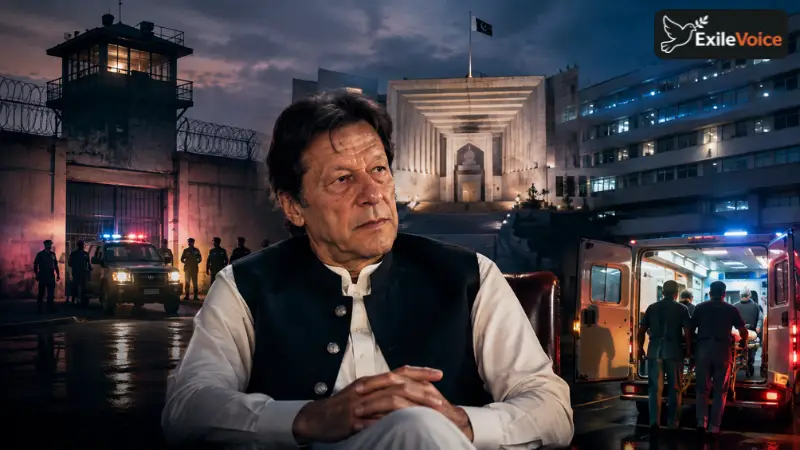
The recent developments surrounding former Pakistani Prime Minister Imran Khan have sparked intense speculation and political discourse. Reports emerging within the last 24 hours indicate that Khan was moved from Adiala Jail to a hospital facility in Islamabad, under circumstances that remain shrouded in uncertainty. This event has been characterized by conflicting narratives, with various reports suggesting movements to both Shifa International Hospital and PIMS (Pakistan Institute of Medical Sciences).
Analysts, including Dr. Shahbaz Gill and host Moeed Pirzada, have dissected the timeline of these events, noting that the ambiguity surrounding the transfer highlights the complexities of the current political landscape in Pakistan. The core of the discussion centers on whether this movement was purely for medical evaluation, including potential treatment for pneumonia, or if it was tied to broader, albeit failed, negotiations regarding his incarceration.
The discourse emphasizes a recurring pattern in Pakistani political affairs where high-stakes moves by state authorities often lead to confusion and contradictory reporting. A critical takeaway from the current situation is Imran Khan’s apparent refusal to accept terms that would facilitate his release if those terms involved compromising his political stance. Reports suggest that after being presented with specific conditions, Khan chose to return to his cell at Adiala Jail, signaling a firm rejection of any deal that would require him to alter his political trajectory.
Furthermore, the involvement of medical professionals and the administrative logistics of the transfer have led to widespread conjecture about the motives behind the state's actions. While some sources suggest that routine medical tests were the priority, others point to the sensitivity of the situation, noting that any health-related intervention is scrutinized heavily by the public and international observers. The political reality remains that despite immense pressure, the former Prime Minister continues to prioritize his political conviction over personal relief from incarceration.
As the situation unfolds, observers are looking toward the next 24 to 48 hours for further clarification. The incident underscores the ongoing tensions between the political opposition and the current state structure, where every administrative move is perceived through the lens of power dynamics and negotiation. The refusal to engage in a "deal" represents a significant moment in the ongoing political narrative, reinforcing the standoff between the leadership of the Pakistan Tehreek-e-Insaf (PTI) and the incumbent authorities. The situation remains fluid, with analysts closely monitoring for any official corroboration of the events that transpired during those critical hours of transition.