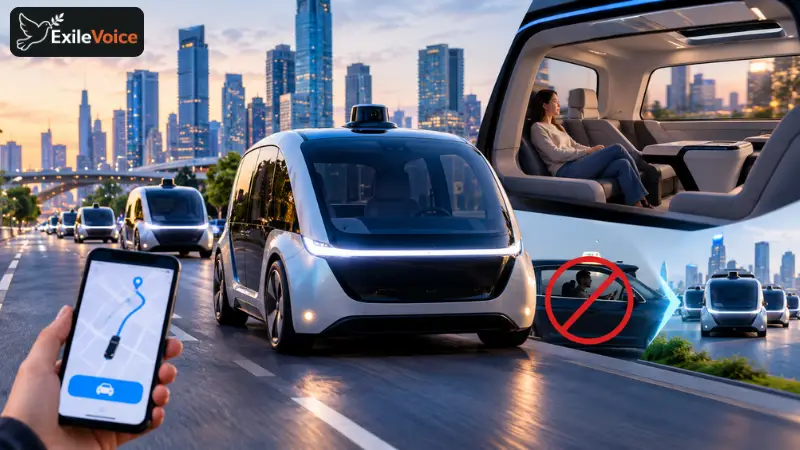
The automotive and transportation sectors are undergoing a monumental shift with the commercial introduction of cybercabs and autonomous robotaxis. Unlike earlier versions equipped with heavy sensor towers, modern autonomous vehicles integrate seamlessly into everyday traffic while eliminating steering wheels and foot pedals entirely. Users can summon these vehicles via smartphone applications, entering a new era of driverless mobility.
This technological leap poses severe challenges for ride-hailing services like Uber and Lyft, which rely heavily on human drivers and independent vehicle ownership. With lower operating costs and significantly enhanced safety margins due to reduced human error, autonomous fleets are expected to cut travel costs substantially. Furthermore, the traditional concept of individual car ownership may transition toward subscription-based transportation models, permanently reshaping urban mobility, insurance structures, and delivery logistics.