

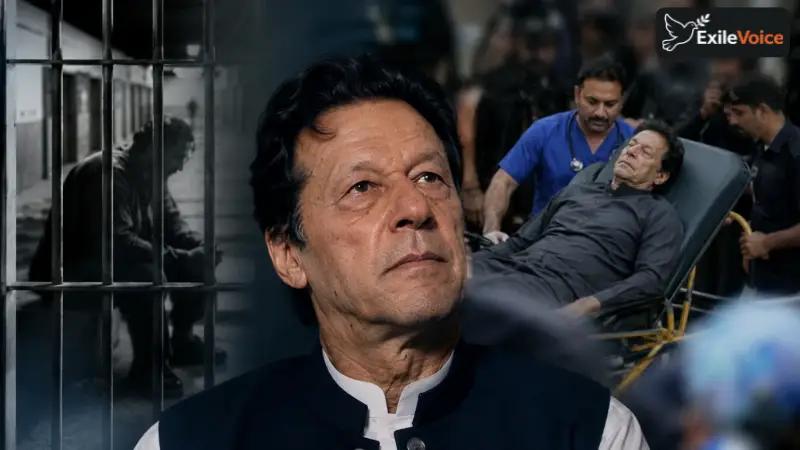
The health of former Prime Minister Imran Khan, currently incarcerated, has become a focal point of intense political speculation and media scrutiny. Recent reports from various journalists, including Alina Shigri, suggest that Khan was recently taken to the Pakistan Institute of Medical Sciences (PIMS) Hospital due to worsening health, specifically citing blood pressure concerns. These reports have sparked a fierce debate, with conflicting narratives emerging from political insiders and media commentators.
For many supporters and observers, the lack of official communication, or the denial of such health issues by certain political figures, is a cause for deep concern. Critics of the current administration argue that a pattern exists where health-related news regarding Khan is either suppressed or dismissed to "normalize" the situation. This leads to profound uncertainty among the public, who feel the need for verified, transparent updates from medical professionals rather than filtered information through political channels.
The discourse has also been influenced by the perspective of figures like Sohail Khan Afridi, who suggests, based on conversations with government officials, that reports of severe health decline are unfounded. However, this dismissal is met with skepticism by those who remember previous incidents, such as the initial denial of Khan’s eye health issues, which later proved to be severe. The complexity of this situation highlights the volatile intersection of healthcare, detention conditions, and political messaging in Pakistan.
As the political situation remains charged, the demand for transparency regarding Imran Khan's well-being is not merely about a public figure's health; it represents a broader struggle for accountability. Whether these health reports are indicators of genuine medical distress or instruments in a larger psychological and political warfare, the need for an independent medical assessment remains the central demand of those advocating for Khan's rights.

