

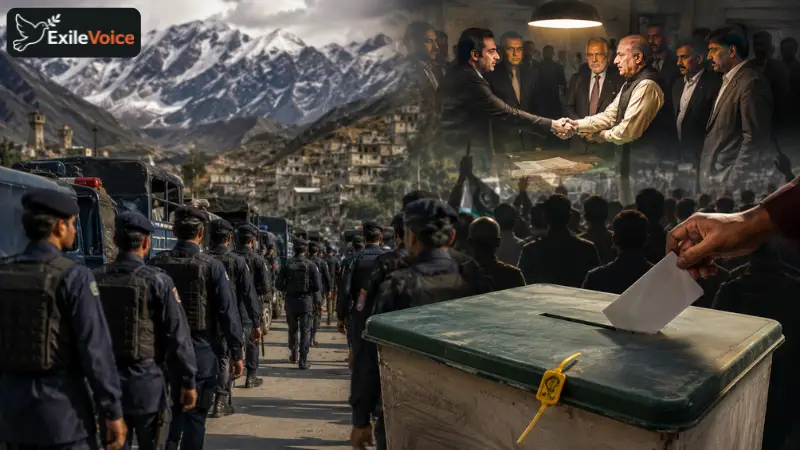
The political landscape of Gilgit-Baltistan is experiencing heightened tension as the region prepares for crucial upcoming legislative elections. A massive and unprecedented deployment of Punjab Police personnel has arrived in the territory, raising serious concerns among local political stakeholders and independent election observers regarding the transparency and fairness of the upcoming polls. The influx of external security forces has fueled widespread speculation that the administrative machinery is positioning itself to manipulate the electoral outcome, overriding the authentic public mandate in favor of pre-determined political arrangements.
Local political discourse is heavily dominated by fears of systemic rigging, colloquially referred to in Pakistani political vocabulary as the deployment of Form 47 engineering. This term signifies the administrative alteration of election results independent of the actual votes cast on the ground. These anxieties were brought to the forefront by statements from the former Finance Minister of Gilgit-Baltistan, Engineer Ismail, a prominent candidate representing the Pakistan Peoples Party (PPP). Ismail openly claimed that a political understanding had already been reached with the powerful quarters in Islamabad, assuring his party's victory regardless of local voting dynamics.
This rhetoric aligns with public statements previously made by PPP Chairman Bilawal Bhutto Zardari during regional electoral campaigns, where he told supporters to focus on securing victory on Form 45, while leaving the management of Form 47 to the party leadership's high-level engagements. Observers indicate that Gilgit-Baltistan has essentially been utilized as a political bargaining chip in larger constitutional games in Islamabad. According to insider accounts, the control of Gilgit-Baltistan's regional government was promised to the PPP in exchange for their critical legislative support in passing controversial constitutional amendments, including the 26th, 27th, and prospective 28th amendments.
Concurrently, the Pakistan Muslim League-Nawaz (PML-N) is attempting to secure its own foothold in the region. Captain Safdar has been actively leading campaigns on the ground, while PML-N supremo Nawaz Sharif made a brief, highly publicized visit to Gilgit-Baltistan before immediately departing for Geneva, Switzerland. The frequent high-profile movements and defensive public rhetoric from political families underscore the high stakes involved. Captain Safdar’s recent public speeches have taken an unconventional, defensive tone, passionately defending the financial integrity of the Sharif family and challenging critics regarding their legacy.
The convergence of heavy external policing, open admissions of backroom political deals, and the subordination of regional governance to federal constitutional horse-trading paints a troubling picture for Gilgit-Baltistan. If the upcoming election results are widely perceived as fabricated through administrative collusion rather than a genuine democratic exercise, it could severely damage the fragile relationship between the federal center and this strategically vital frontier region.