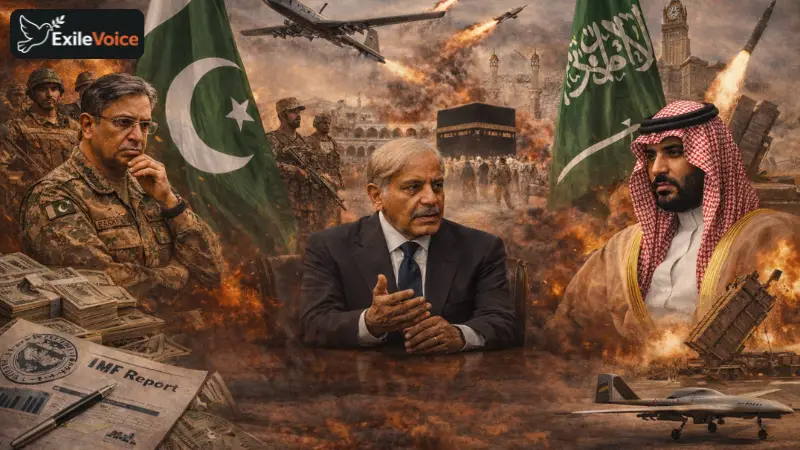
The long-standing strategic alliance between Saudi Arabia and Pakistan, once considered the bedrock of Islamic military cooperation, is currently facing its most significant test in decades. Recent reports from the Financial Times, citing sources close to Pakistan's high military command, suggest a growing sense of disillusionment in Islamabad. The core of the issue lies in a fundamental misalignment of expectations: Pakistan viewed the defense pact as a "cash-for-deterrence" model, while Saudi Arabia has increasingly looked elsewhere for its immediate security needs.
The Pakistani military leadership originally calculated that a formal defense agreement would create a perception of nuclear-backed deterrence sufficient to protect Saudi soil without requiring active combat. In exchange, Pakistan anticipated substantial financial infusions, including direct investment and "cash on hand" to stabilize its fragile economy. However, as regional tensions have escalated into active skirmishes involving missile and drone attacks, the "deterrence" aspect of the deal has proven insufficient. Saudi Arabia has continued to face aerial threats, and the expected financial windfall for Pakistan has largely failed to materialize.
Adding to the tension is Saudi Arabia’s strategic pivot toward Ukraine. In a move that has surprised many in Islamabad, Riyadh has engaged in high-level discussions with President Volodymyr Zelenskyy regarding the acquisition of advanced drone technology. Ukraine’s drones, touted for their cost-effectiveness and proven success in intercepting sophisticated Iranian-designed systems, represent a shift away from traditional Pakistani military hardware. For Saudi Arabia, the urgency of the "now", the need to intercept $10,000 drones with systems more affordable than $2 million Patriot missiles, has outweighed the long-term prestige of the Pakistani alliance.
This shift underscores a broader trend in Middle Eastern diplomacy: the move toward functional, technology-based security rather than traditional "brotherly" defense pacts. As Pakistan continues to rely on IMF tranches for economic survival, its inability to convert its military prestige into modern, exportable defense technology like low-cost drones has left it sidelined. The "moment in the sun" for the Pakistani-Saudi pact appears to be fading, replaced by a cold, transactional reality where immediate defense utility trumps historical ties.