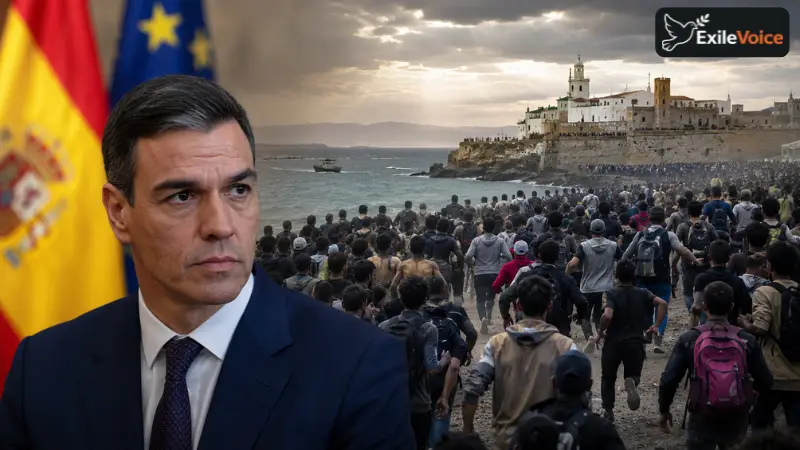
International relations and foreign policy are currently experiencing deep shifts, highlighted by the recent events involving Spain's leadership and strategic maneuvers in Europe. Spanish Prime Minister Pedro Sánchez has taken a prominent stance regarding the humanitarian crisis in Gaza, alongside explicit opposition to foreign military actions in Iran. These vocal policies have drawn sharp diplomatic resistance and potential repercussions from opposing international actors.
A striking development occurred when approximately 60,000 individuals suddenly crossed into Ceuta, a small Spanish territory bordering Morocco. Spanning a mere area with a baseline local population of roughly 85,000 residents, the enclave faced an immense logistical and humanitarian challenge within a single day. Reports and local documentation indicated that Moroccan authorities directed migrant movements toward this border point, fueling speculation about orchestrated pressure against Madrid.
Analysts suggest this sudden surge serves as a calculated pressure tactic designed to penalize Spain for breaking consensus with broader Western policies concerning the Middle East. While thousands of the arrivals eventually returned, the incident underscores the vulnerability of sovereign borders and the complex interplay between migration, statecraft, and geopolitical alignment. Governments across Europe continue to monitor these developments closely as diplomatic tensions persist over regional conflicts and independent foreign policy decisions.