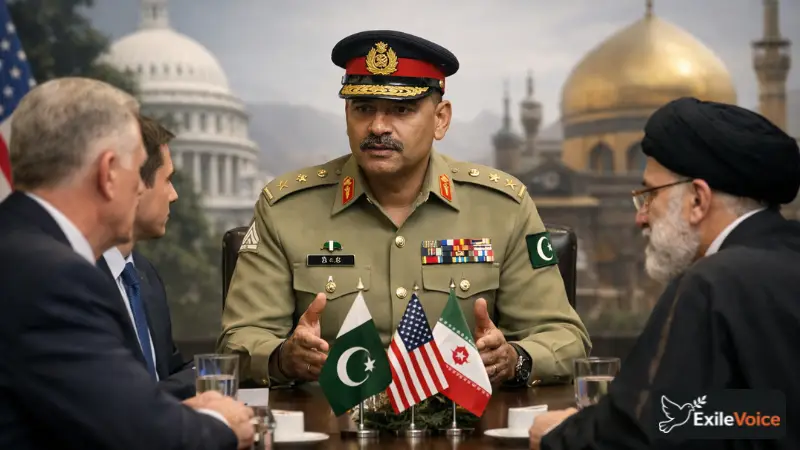
Pakistan’s Chief of Army Staff, General Asim Munir, is currently witnessing a significant rebranding of his international profile. Following a series of strategic maneuvers, Munir has been featured in major Western outlets like the Wall Street Journal, not as a standard military leader, but as a sophisticated power broker capable of facilitating peace between global rivals. This shift from a domestic focus to an international mediator represents a "grand slam" for Pakistan’s military establishment, effectively outmaneuvering regional competitors and securing a seat at the world's most influential tables.
The "Munir Doctrine" of late 2025 and early 2026 has been characterized by a proactive engagement with the U.S. administration. Reports suggest that the General successfully lobbied for the inclusion of Vice President J.D. Vance in the Islamabad talks, seeking a negotiator with more "institutional weight" than the business associates typically found in President Trump's inner circle. Furthermore, the military’s role in neutralizing threats, such as the capture of high-value targets responsible for past attacks on U.S. forces, has built a level of trust with the Pentagon and the White House that had been missing for years.
However, this international acclaim stands in stark contrast to the internal dynamics within Pakistan. While the world praises Munir for his "smart moves" on the global stage, domestic critics highlight a history of harsh suppression of dissent and a strict stance toward those with sympathies for the Iranian regime. The military's handling of the "Shia sentiment" within Pakistan, including the stern warnings issued to religious leaders during the height of the conflict, remains a point of contention. The "success" in Islamabad is thus viewed through two different lenses: a diplomatic triumph for the state and a continued consolidation of power by the establishment.
The ultimate question for Pakistan remains the tangible benefit for its citizens. While the military secures extensions, international prestige, and foreign investments, the average Pakistani faces a mounting economic burden. The "Munir Chhakka" (Munir's Sixer), as some local analysts call it, has undoubtedly improved the military's standing in Washington, but its ability to translate this into domestic economic relief or long-term political stability is yet to be seen. As the Islamabad talks proceed, Munir’s performance will be judged not just by the peace he facilitates abroad, but by the prosperity he can secure at home.