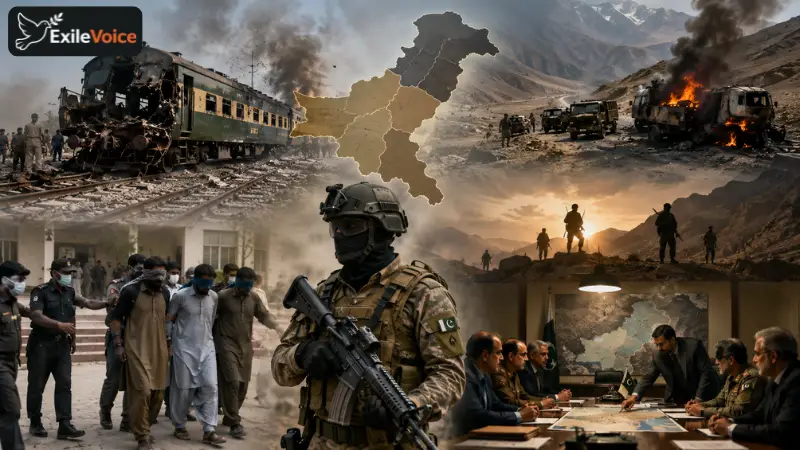
The internal security landscape of Pakistan is experiencing heightened friction, characterized by a series of coordinated asymmetric challenges across Balochistan and parts of Khyber Pakhtunkhwa. A severe kinetic incident recently took place in Quetta, where a localized railway asset was targeted by an explosive device. The attack resulted in substantial infrastructural damage and a tragic loss of life, with casualty figures fluctuating between 24 and 40 fatalities, alongside dozens of critical injuries. This incident adds to a troubling pattern of targeted operations, including the recent assassination of a prominent medical professional in Azad Kashmir, signalling an expansion of hostile operational footprints.
Simultaneously, the security apparatus in Balochistan faces a sophisticated wave of non-kinetic disruptions, particularly targeting institutional human capital and logistics. Recent security briefs confirm the abduction of high-profile academic leaders from Gwadar University, alongside the disappearance of senior aviation security personnel from Quetta Airport. Further compounding the administrative challenge, commercial freight transport has faced direct interdiction, evidenced by the destruction of coal transport vehicles in the Ziarat region and the subsequent abduction of local law enforcement officials.
These systemic vulnerabilities highlight a fundamental disconnect between high-level security rhetoric and ground-level operational realities. Historical policy pronouncements that minimized regional militancy as a low-level administrative issue manageable by localized police tactics have been thoroughly disproven by the complexity of these coordinated actions. The deliberate targeting of infrastructure, academic administrators, and security personnel indicates an adversary focused on institutional disruption rather than random acts of violence.
To counter these multi-front threats effectively, the state must transition from reactive kinetic measures to a comprehensive, intelligence-driven domestic strategy. This requires a redistribution of institutional energy away from domestic political polarization and toward core security mandates.
The defense and law enforcement architecture, sustained by the national treasury, must optimize its resource allocation toward securing critical infrastructure and counter-terrorism operations. Furthermore, political analysts suggest that sustainable long-term stability in peripheral regions cannot be achieved through force alone; it requires utilizing nationally popular political figures capable of fostering cross-provincial cohesion and offering a legitimate political alternative to grievance-driven narratives.