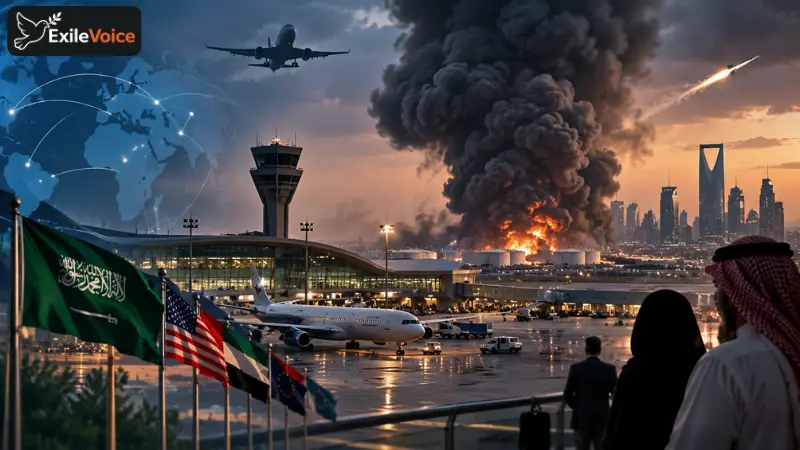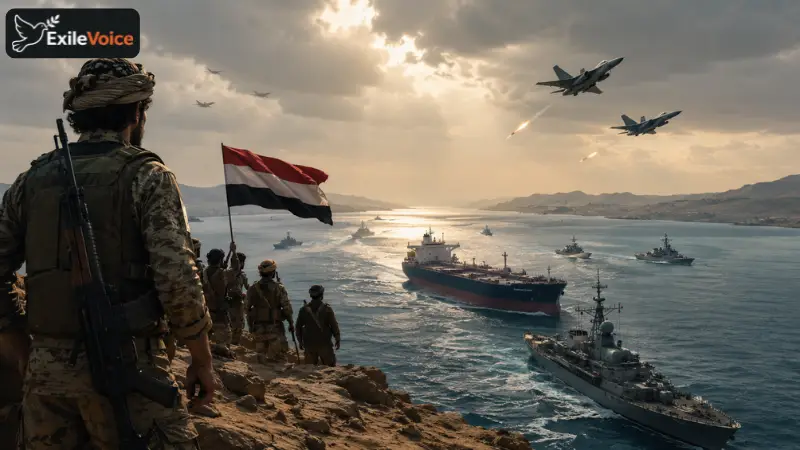
The geopolitical landscape of the Middle East has entered a tense phase following the formal announcement by Houthi forces declaring a naval blockade against Saudi Arabia. This development introduces a new theater of economic and strategic friction centered around the critical maritime choke points of the Bab el-Mandeb strait and the Red Sea.
The Houthi military command stated that the naval blockade aims to restrict maritime export routes. Reports indicate that Saudi Arabia has been exporting substantial volumes of oil daily, utilizing alternative transport corridors and pipeline networks from the Persian Gulf to bypass constraints in the Strait of Hormuz. The implementation of a naval blockade threatens to disrupt these export flows, placing renewed pressure on global energy markets and international trade supply chains.
This escalation follows a series of localized skirmishes and airspace violations. Recent aerial interceptions and subsequent military responses near Sanaa airport highlighted the fragile nature of the existing stand-by arrangements established in previous years. While diplomatic channels involving international mediators continue to explore potential ceasefires to stabilize crude oil prices, analysts note that kinetic actions on the ground often overshadow diplomatic overtures.
The broader implications extend to regional military postures. Naval assets deployed by various international actors in the Red Sea, Arabian Sea, and Mediterranean remain on high alert. The balance of power in the region relies heavily on the capacity of these forces to manage multi-directional missile and maritime threats while safeguarding critical energy transit corridors. As the situation evolves, the effectiveness of deterrence strategies and the response of regional states will determine whether the current standoff escalates into broader open hostilities.