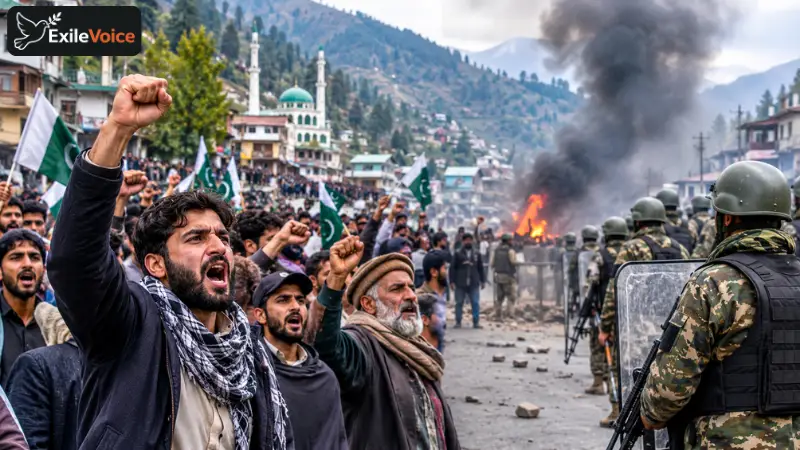
The geopolitical landscape of South Asia is frequently shaped by internal policy decisions and regional governance challenges. In Pakistan-administered Kashmir, the situation in Rawalakot has escalated significantly following months of civil unrest and stalled negotiations between local authorities and the Joint Awami Action Committee. The protests, which began earlier in the year regarding economic grievances, subsidies, and administrative representation, reached a critical juncture when security forces launched operations to clear demonstration sites.
Reports of heavy gunfire, clashes, and casualties have brought the governance approach of state institutions under intense scrutiny. While state authorities maintain that restoring public order, clearing blocked thoroughfares, and ensuring administrative continuity are paramount, civil society and independent analysts argue that a purely kinetic or punitive response fails to address the root socioeconomic grievances of the populace. Citizens in the region have voiced concerns over basic living standards, resource distribution, and political representation, emphasizing that a sustainable resolution requires dialogue, accountability, and structural reform rather than force.
The events in Rawalakot reflect a broader trend of centralized governance and the emergence of a hardline administrative stance across various regions. Observers note that when peaceful civic mobilization is met with heavy-handed security measures, the risk of deep-seated alienation increases. Moving forward, policymakers face the imperative of balancing national security objectives with the protection of fundamental rights, ensuring that civil grievances are addressed through political engagement and transparent investigations into recent incidents.