The successful extraction of a high-ranking US Colonel and Weapon Systems Officer from the Iranian interior marks one of the most complex search-and-rescue (SAR) missions in modern military history. According to official statements and verified field reports, the operation spanned over 36 hours, beginning shortly after an F-15 strike aircraft went down over Iranian territory. While the primary pilot was recovered relatively quickly, the second officer, a Colonel overseeing tactical systems, was forced into a high-stakes game of survival in the rugged, mountainous terrain of Iran’s Khuzestan and Boyer-Ahmad provinces.
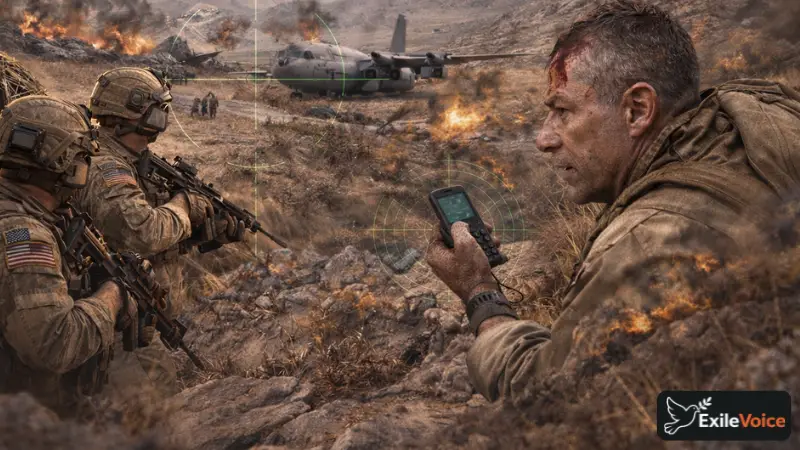
The survival of the Colonel was attributed to rigorous "Survival, Evasion, Resistance, and Escape" (SERE) training. Upon landing, the officer successfully camouflaged his parachute, a critical first step to avoid detection by Iranian Revolutionary Guard Corps (IRGC) patrols. Throughout the 40-hour ordeal, the officer utilized a secure tactical communication device to provide "pings" to US Central Command (CENTCOM), allowing satellite assets and stealth F-35 aircraft to maintain a continuous protective "umbrella" over his position.
The rescue itself was a massive multi-domain effort. Under direct orders from the White House, hundreds of US Special Operations Forces were deployed. The operation utilized C-130 Hercules aircraft, specifically chosen for their ability to land and take off from unprepared, dirt surfaces. To confuse Iranian forces, the US military employed sophisticated deception tactics, including landing helicopters in decoy locations to draw IRGC units away from the actual extraction zone. When Iranian ground units attempted to close within a three-kilometer radius of the Colonel, they were repelled by precision air strikes from circling loitering munitions and fighter jets.
However, the mission was not without cost. During the extraction, a C-130 Hercules became mired in the soft terrain and could not take off. To prevent sensitive technology from falling into enemy hands, US forces deliberately destroyed the aircraft and at least one Black Hawk helicopter before departing on follow-up rescue planes. Despite these equipment losses, the operation is being hailed as a major strategic victory for the United States. By retrieving the officer, the US denied Tehran a significant propaganda tool and a powerful bargaining chip, fundamentally shifting the leverage back toward Washington as the conflict intensifies.