

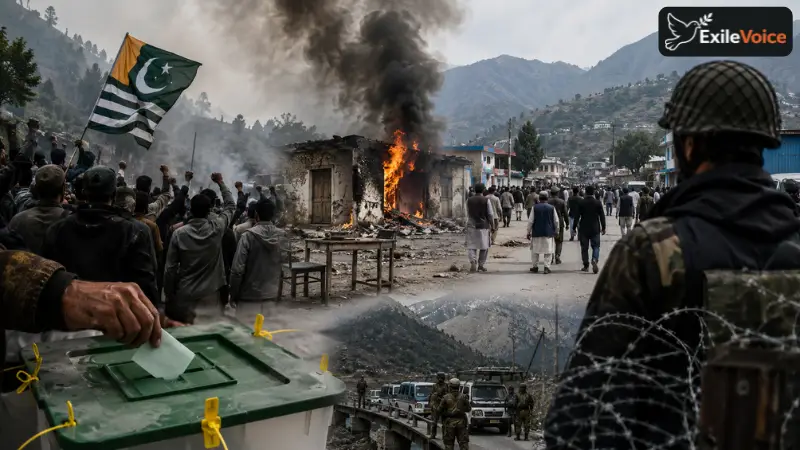
The political landscape of Azad Kashmir has once again become a focal point of intense controversy as the region undergoes a phased electoral process. The initial round of voting, concentrated in the Mirpur division adjacent to Punjab, was marked by extraordinary developments that departed sharply from standard democratic proceedings. Rather than robust civic participation, numerous polling stations reported sparse attendance, reflecting the deep impact of calls for non-participation issued by local resistance groups and the Kashmir Action Committee. These organizations, having previously engaged in prolonged protests and ongoing long marches toward Muzaffarabad, chose to distance themselves entirely from the electoral exercise.
Tensions escalated dramatically with reports of direct physical confrontation and sabotage. In the Samahni constituency, identified as LA-6, nine distinct polling stations were subjected to arson attacks, reducing electoral infrastructure to ash. Official complaints filed by political representatives highlighted bitter local rivalries and administrative failures in safeguarding sensitive voting locations. Such incidents underscore a profound breakdown in public order and institutional security during a critical governance milestone.
Concurrently, administrative decisions regarding resource distribution drew severe criticism from opposition factions and regional watchdogs. The deployment of state-backed incentives and transportation initiatives immediately preceding polling day raised serious questions regarding compliance with electoral codes of conduct. Critics argued that such measures constituted an unfair advantage, designed to sway voter sentiment under the guise of developmental outreach. Local election commissions faced intense scrutiny for their perceived inability to enforce strict neutrality and regulate campaigning effectively.
Ultimately, these elections have highlighted a widening chasm between state mechanisms and popular sentiment in Azad Kashmir. The reliance on heavy security deployment, coupled with isolated acts of civil disobedience and structural boycotts, points toward a structural crisis of legitimacy. For sustainable governance to take root in the region, future policy frameworks must address core public grievances, ensure absolute electoral transparency, and rebuild the fractured trust between the citizenry and governing institutions.

