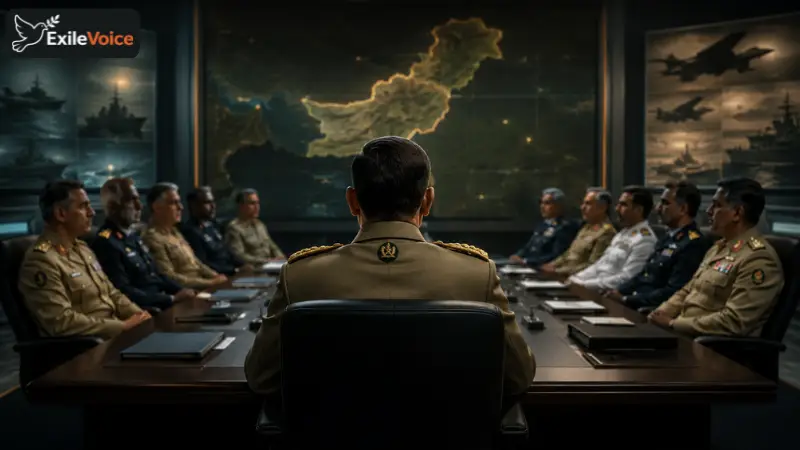
The military command structure in Pakistan has undergone significant transformations, drawing intense scrutiny from analysts and defense observers. At the center of these changes is Field Marshal Asim Munir, whose consolidation of power has reshaped the traditional hierarchy of the armed forces. Observers note that the regime has elevated its top leadership to unprecedented levels, effectively bringing all primary branches of the military, including the army, air force, and navy, under a unified command structure. This centralization raises critical questions regarding internal trust, command cohesion, and the strategic distribution of authority within the military establishment.
Historically, Pakistan’s military architecture included distinct checks and balances designed to separate various operational domains. For instance, the Office of the Chairman Joint Chiefs of Staff traditionally served as a coordinating body, particularly overseeing nuclear assets through the National Command Authority. Recent structural reforms, however, have streamlined these positions and introduced new entities such as the National Strategic Command, appointed under Lieutenant General Amir Raza. These institutional shifts reflect a deliberate effort by the leadership to consolidate control, minimize institutional friction, and align key command positions with trusted personnel.
Beyond structural reorganization, internal dynamics within the officer corps highlight persistent institutional divides. Observers often point to the distinction between graduates of the Pakistan Military Academy (PMA) and the Officers Training School (OTS), a historical training pathway that produced several senior figures, including Field Marshal Asim Munir. While professional qualifications and advanced degrees remain prerequisites for high-ranking positions, the nuances of institutional backgrounds continue to influence the broader cultural and operational landscape of the armed forces.
Furthermore, the freezing of certain promotions at the three-star level and the reliance on tenure extensions for key commanders have sparked debate among defense analysts. While supporters argue these measures ensure stability during a period of complex regional and domestic challenges, critics contend they limit upward mobility and concentrate decision-making authority within a narrow circle of trusted loyalists. As Pakistan navigates ongoing economic pressures, security concerns, and shifting geopolitical alignments, the internal stability and command dynamics of its military remain pivotal to the nation's political trajectory.