

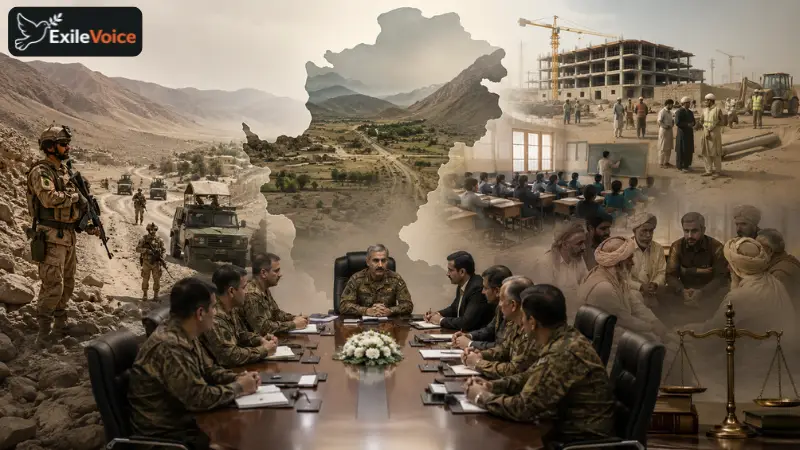
Recent high-level security meetings at the General Headquarters (GHQ) have brought renewed focus to the intricate relationship between regional stability, economic development, and governance. Discussions centered on the premise that unrest in remote areas is directly tied to a lack of basic infrastructure, employment opportunities, and equitable growth. Analysts note that security cannot be treated as an isolated military problem; it requires structural reforms in governance and transparent economic management to achieve sustainable peace.
The persistent security challenges in regions such as Balochistan continue to raise critical questions regarding the efficacy of conventional military operations. Critics point out that despite numerous targeted campaigns over the years, law and order conditions remain fragile, as evidenced by recent violent incidents involving judicial officials. Experts emphasize that sustainable solutions must involve comprehensive political engagement, institutional accountability, and genuine representation for local populations to restore long-term stability and national cohesion.

