In contemporary political landscapes, the construction of leader profiles through controlled media environments plays a significant role in governance and public perception. Across different nations, state and political actors frequently employ specialized narratives to cement authority, utilizing media alignment and psychological deterrence. Examining these mechanisms offers insight into how political power is consolidated and how citizen movements eventually respond to institutional pressure.
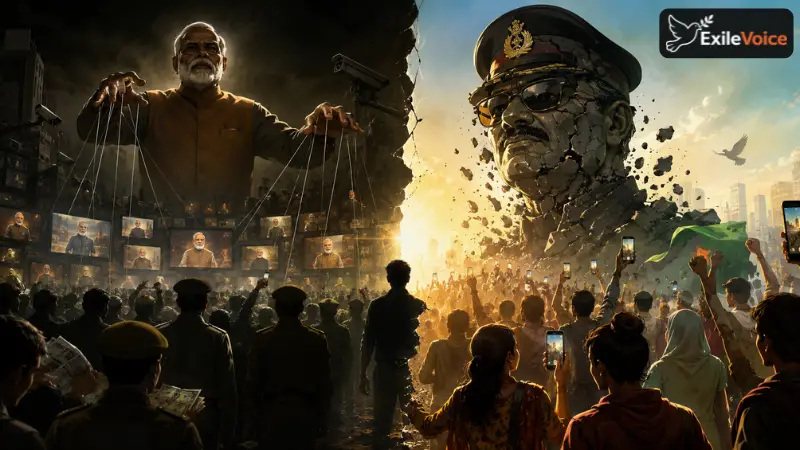
The political trajectory in India over the past two decades demonstrates how ideological frameworks can be systematically embedded within national institutions. Through structured narrative building, political leadership often attempts to project an aura of divine or exceptional mandate, portraying leaders as indispensable figures for national destiny. Mainstream media networks frequently facilitate this projection by adopting compliant stances, minimizing critical inquiry, and celebrating leadership decisions without substantial pushback. Similar dynamics are visible in various regional contexts where security establishments or ruling authorities utilize administrative apparatuses and aligned media platforms to shape public discourse, marginalize opposition figures, and frame dissent as a threat to national stability.
A core component of maintaining such political structures involves the cultivation of fear and the regulation of communication channels. By employing legal pressures, economic influence over media houses, and digital restrictions, authorities seek to curtail independent reporting and grassroots mobilization. However, public resistance often adapts by shifting toward decentralized platforms, utilizing digital tools, and employing satire to challenge manufactured personas. The recent political developments in India, where youth-led protests and public mobilization resulted in high-profile ministerial accountability, highlight the limitations of absolute narrative control when civic engagement reaches a critical threshold.
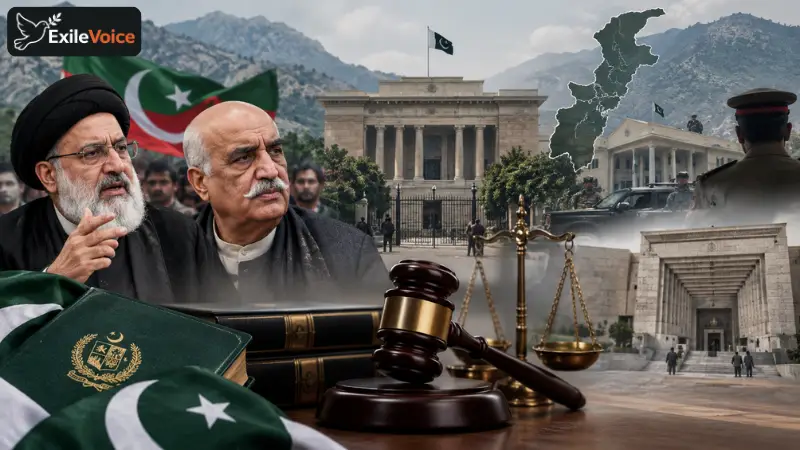
Similarly, public pushback in Pakistan illustrates the enduring capacity of citizens to challenge systemic overreach through electoral participation and sustained resilience. Despite severe structural constraints and institutional pressures, collective civic action has repeatedly disrupted established political engineering. Analysts note that effectively countering entrenched authoritarian tendencies requires more than direct confrontation; it necessitates eroding the artificial social prestige and manufactured aura surrounding political and military elites through systematic public ridicule, meme culture, and social non-cooperation.
Ultimately, the friction between institutional dominance and public awakening underscores a broader regional trend. As younger demographics leverage digital connectivity to dismantle state-sponsored mythologies, governance systems face increasing pressure to adapt or encounter progressive delegitimization. Recognizing these patterns enables a clearer understanding of the shifting balance of power between centralized authorities and politically conscious citizens.