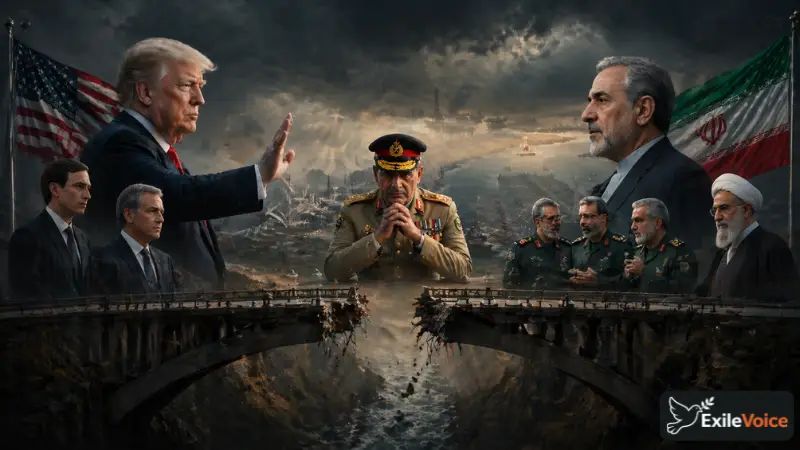
The fragile diplomatic bridge between Washington and Tehran has suffered its most significant setback since hostilities began 57 days ago. In a sudden reversal that has sent shockwaves through the international community, U.S. President Donald Trump announced the cancellation of a high-level mission to Islamabad that was to be led by his son-in-law, Jared Kushner, and close associate Steve Witkoff. The mission, intended to engage with Iranian Foreign Minister Abbas Araghchi on Pakistani soil, was poised to be the first face-to-face breakthrough in the conflict. However, Trump’s last-minute directive, framed by the blunt assertion that an 18-hour flight was unnecessary because "we have all the cards", marks a return to a more aggressive, offline stance.
The collapse of this "Islamabad Corridor" is attributed to deep-seated internal divisions within the Iranian regime. According to high-level U.S. intelligence and reports from the Wall Street Journal, the Iranian leadership is currently paralyzed by "infighting" between two distinct factions: the "Hawks" (the IRGC and hardliners) who favor continued escalation and ground preparation, and the "Doves" (pragmatists and diplomats) who seek a negotiated settlement. Trump’s strategic calculation suggests that the U.S. will not provide Tehran with the "luxury" of a high-level audience while their internal command remains fractured. By pulling the mission, Washington is effectively forcing the Iranian regime to reconcile its internal contradictions before any further American resources are committed to the process.
For Pakistan, this development is a severe diplomatic blow. Over the past three weeks, the Pakistani military establishment, led by General Asim Munir, had successfully positioned the country as the "indispensable facilitator." The "shuttle diplomacy" conducted by Munir and Prime Minister Shehbaz Sharif across capitals like Beijing, Riyadh, and Doha had earned Pakistan a rare moment of international relevance. However, the breakdown reveals the limits of Pakistan’s influence. While Islamabad successfully brought the parties to the table, it could not bridge the ideological chasm between a transactional American presidency and a fragmented Iranian revolutionary state. The offline status of these talks places Pakistan in a precarious position, as its self-projected image of a "global bridge" is now tested by the very real possibility of a diplomatic failure.