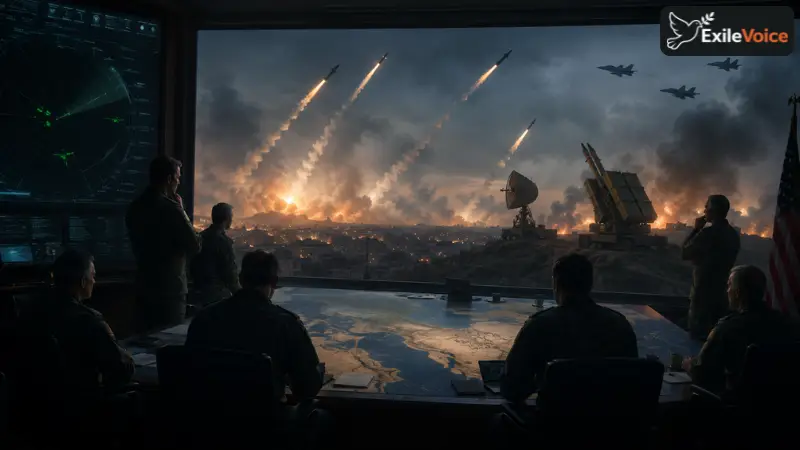
Recent geopolitical developments underscore a critical juncture in United States foreign policy and military strategy regarding the Middle East. Reports indicate that top military advisors and the Chairman of the Joint Chiefs of Staff cautioned leadership regarding the sustainability of prolonged military campaigns. Specifically, intensive operations over a multi-week span have created significant strain on regional resources, notably depleting advanced air defense interceptor stockpiles.
Strategic analysts point out that despite massive aerial campaigns, targeted nations have maintained robust defensive and retaliatory capabilities, utilizing advanced ballistic missile technology such as the "Khyber Shikan" system. This system has demonstrated high maneuverability and speed, challenging traditional deterrence frameworks. Consequently, policymakers face complex cost-benefit analyses, balancing the necessity of deterrence with the logistical limitations of regional defense assets. As diplomatic channels re-emerge as a focal point, the focus shifts toward mitigating further escalation and reassessing long-term strategic objectives in a volatile security environment.