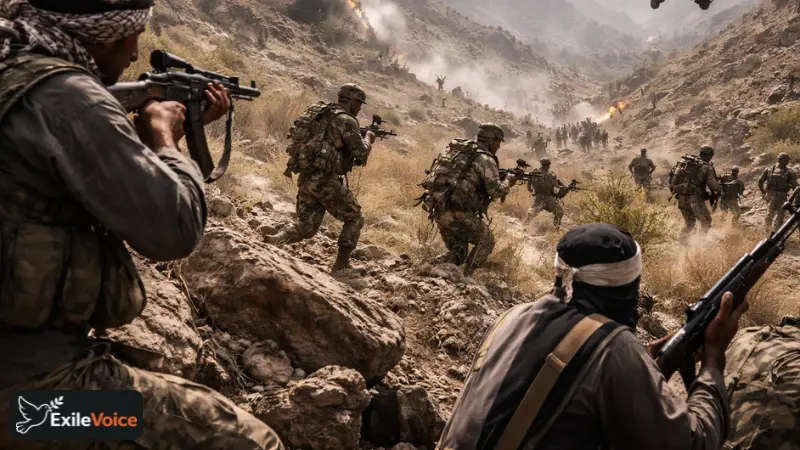
The province of Khuzestan, Iran, has become the epicenter of a high-stakes international drama following the downing of U.S. military aircraft. Currently, three distinct groups are converged on the rugged, mountainous terrain in a race to locate a missing American pilot. On one side, U.S. forces are deploying advanced aerial assets and search-and-rescue teams. Opposing them are the Iranian Revolutionary Guard Corps (IRGC) and local police. Adding a unique layer to this conflict are the Bakhtiari tribes, local inhabitants who have taken up arms to join the search on their own terms.
The missing pilot is trained in "Survival, Evasion, Resistance, and Escape" (SERE) protocols, carrying specialized encrypted communication gear and survival equipment designed to sustain them in harsh environments. However, the terrain in Khuzestan is notoriously unforgiving, characterized by jagged, arid peaks that provide both cover and significant physical peril. While the U.S. admits to the loss of two aircraft, Iran claims to have struck multiple helicopters during subsequent rescue attempts. The IRGC has notably placed a substantial bounty on the pilot, specifying that they must be captured alive, which underscores the potential use of the individual as a significant diplomatic bargaining chip.
International observers are closely monitoring the situation, as the outcome could shift the psychological balance of the ongoing regional conflict. The U.S. is facing a dual challenge: navigating a hostile electronic warfare environment where their "invincible" air defenses are being tested by shoulder-fired missiles, and managing the boots-on-the-ground reality of local tribes who claim superior knowledge of the local geography. As the hours pass, the window for a successful "snatch-and-grab" rescue operation narrows, increasing the likelihood of a protracted hostage or prisoner-of-war scenario.