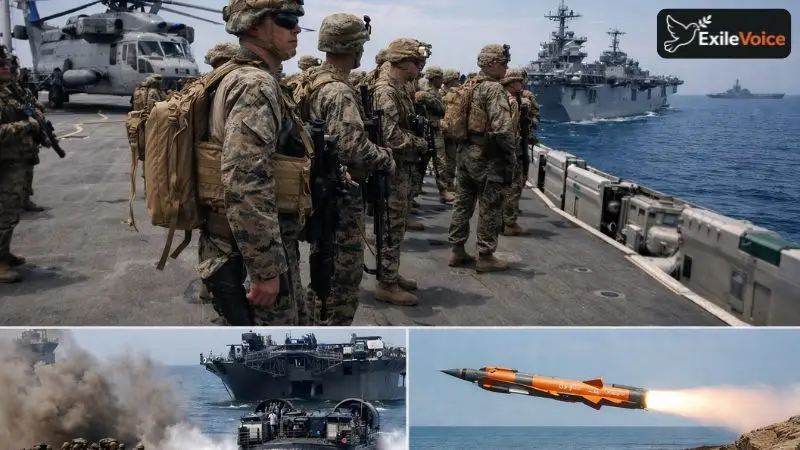
The arrival of a specialized U.S. Marine unit, comprising approximately 3,500 soldiers, in close proximity to Iranian territorial waters marks a significant escalation in the ongoing regional conflict. This deployment is not a standard military movement but involves a highly sophisticated unit capable of multi-dimensional operations. These troops are trained for amphibious assaults, aerial insertions via parachute, and the seizure of maritime vessels. The presence of these forces near the Strait of Hormuz suggests a strategic intent to secure critical energy corridors and potentially occupy strategic islands or coastal zones to ensure the unimpeded flow of global oil supplies.
This military buildup occurs against a backdrop of failed ceasefires and intensifying bombardment. Despite President Trump's initial announcements of 5 and 10 day extension periods for cessation of hostilities, the conflict has only expanded. Reports indicate that U.S. and Israeli forces have systematically targeted Iranian infrastructure, including chemical plants, power generation units, oil installations, and educational institutions. The strategy appears to be one of "maximum pressure" through kinetic means, aiming to degrade Iran's industrial and military capabilities before any formal ground operations might commence.
In response to this looming threat, the Iranian military has showcased its "Qader" missile system. This coastal-to-sea missile is a specialized asset designed specifically to target aircraft carriers and large naval vessels. Unlike traditional ballistic missiles that arc high into the atmosphere—making them visible to radar and vulnerable to interception—the Qader flies just a few meters above the water's surface. This "sea-skimming" capability allows it to evade radar detection until it is in close proximity to its target. Furthermore, its advanced navigation and sensor arrays allow it to lock onto and track moving targets over distances exceeding 150 kilometers.
The standoff is further complicated by the diplomatic maneuvers taking place in Islamabad. While U.S. forces tighten the "noose" around the region, a meeting of foreign ministers from three major Islamic nations is underway in Pakistan. The objective appears to be a 15-point U.S. agenda aimed at coercing Iranian concessions. However, there is a prevailing sentiment that the U.S. is seeking through negotiations what it has failed to achieve on the battlefield. The dual-track approach of military intimidation and diplomatic coercion remains a volatile mix, with neither side showing a willingness to retreat from their established red lines.