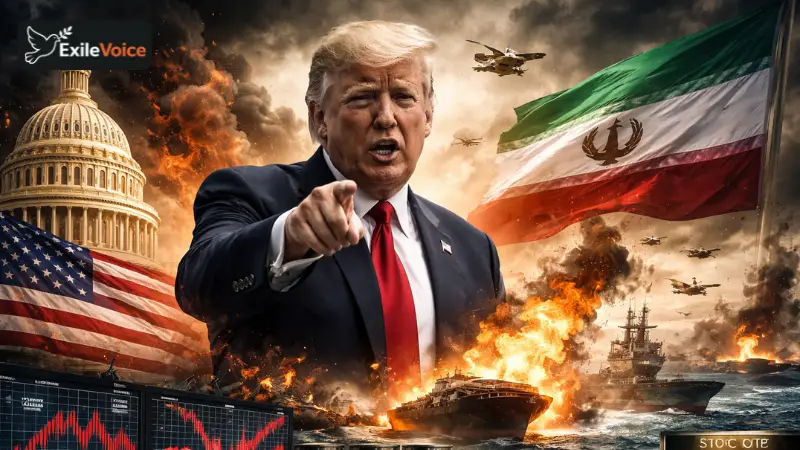
The geopolitical landscape in Washington D.C. has entered a phase of heightened uncertainty following a significant 19-minute address by President Donald Trump regarding the ongoing conflict with Iran. Analysts and strategic experts are increasingly concerned that the administration has entered a "crisis of its own making," characterized by a profound lack of trust and a breakdown in traditional diplomatic channels.
The current deadlock stems from a series of contradictory military and diplomatic actions. In June 2025, a military strike against Iran was followed by a ceasefire that Tehran initially accepted. However, a subsequent attack during active negotiations has shattered any remaining "level of trust." This "trust deficit" is the primary engine of the current escalation; the Iranian leadership now perceives American commitments as unreliable, leading to a refusal to engage in further talks.
The global economic repercussions were immediate. Following the President's speech, which was intended to reassure the American public, global oil prices surged, and Asian stock markets experienced a sharp decline. Financial markets interpreted the rhetoric not as a roadmap to peace, but as a precursor to further instability.
Furthermore, the conflict has expanded into the Gulf Cooperation Council (GCC) region. Despite the President’s praise for allies like Saudi Arabia, Qatar, and the UAE, the reality on the ground is grim. Iran has reportedly issued a "target list" of 17 American-linked companies operating in the GCC, including tech giants like Google, Meta, and Boeing. Recent reports of a missile strike on an Amazon data center in Bahrain illustrate that the conflict is no longer confined to traditional borders but is targeting the digital and economic infrastructure of the region.
This situation represents a "War of Attrition" unlike those seen in the past. While historical comparisons are often made to the Korean or Vietnam Wars, the current scenario is unique. Iran stands largely alone, without the massive direct troop support from superpowers like China or Russia that characterized 20th-century conflicts. Instead, it is engaging in a high-stakes standoff where both sides appear to have no clear "off-ramp" or sense of direction.