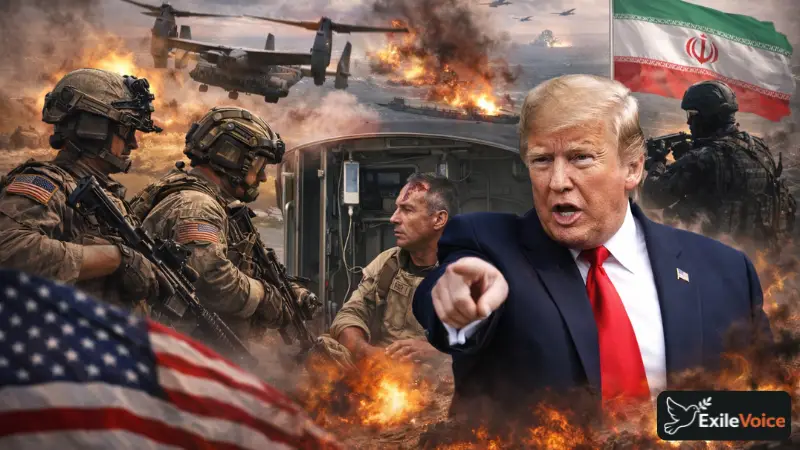
The Middle East has entered a critical 48-hour window following a dramatic escalation in rhetoric and military action from the United States. President Donald Trump has issued a severe ultimatum to Tehran: fully reopen the Strait of Hormuz within the next two days or face a military campaign described as "hell let loose." This warning comes on the heels of what the White House is calling one of the most "daring" commando operations in US history, the successful rescue of a high-ranking US service member, identified as a Colonel and Weapon Systems Officer, from deep within Iranian territory.
The rescue operation, which took place in the rugged Khuzestan and Boyer-Ahmad provinces of Iran, involved hundreds of US Special Operations Forces, including Navy SEALs and Army Rangers. Reports suggest the extraction was supported by intensive aerial bombardment to prevent Iranian IRGC forces from intercepting the rescue teams. While early reports from sources like Al Jazeera were ambiguous regarding the service member's gender and status, President Trump later confirmed the rescue of a male Colonel who, despite being wounded, remained in constant communication with rescue teams via secure tactical tools throughout his evasion.
This successful extraction provides a significant political and strategic boost to the Trump administration. Politically, it reinforces the "Make America Great Again" narrative of decisive leadership, likely reversing a recent slump in the President's approval ratings. Strategically, it removes a major piece of leverage from Tehran. Previously, the threat of a US officer being paraded on Iranian television as a prisoner of war acted as a deterrent against full-scale US strikes. With the Colonel safe, the administration now feels emboldened to execute the "48-hour ultimatum."
The human and structural cost of this conflict is already immense. US Central Command (CENTCOM) reports over 12,300 strikes on Iranian industrial complexes, coastal defenses, and research facilities. Israel has contributed an additional 10,000 strikes, focusing heavily on petrochemical zones like Mahshahr to cripple the Iranian economy. As the 48-hour clock ticks down, the international community watches with bated breath to see if Iran will blink or if the region will descend into a level of warfare previously unseen in the 21st century.