

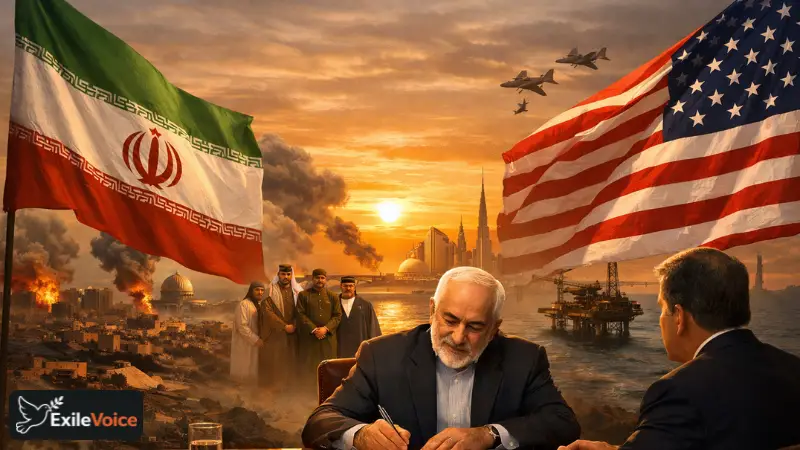
In a significant diplomatic maneuver, Javad Zarif, Iran’s former Foreign Minister, has published a comprehensive peace proposal in Foreign Affairs titled "How Iran Should End the War." This document is being viewed in Washington not merely as an academic exercise, but as a structured offer from the Iranian establishment to the U.S. foreign policy elite, including the Trump administration.
The proposal arrives after 37 days of continuous conflict, during which the U.S. and Israel have conducted over 22,000 strikes against Iranian targets. Despite this intense bombardment, Iran’s political and military infrastructure remains standing, leading to a realization that a total military victory may be unattainable without a catastrophic ground war.
Zarif’s blueprint suggests a "one-step" grand bargain rather than unstable, short-term ceasefires. Key components include:
- Nuclear Guarantees: Iran would provide "black and white" guarantees against weaponization, accepting the IAEA's additional protocols and diluting its enriched uranium to 3.67%.
- Economic Reintegration: In exchange, the U.S. must lift all bilateral and UN sanctions, allowing for international investment in Iran’s oil and petrochemical sectors.
- Reconstruction Investment: Zarif suggests the U.S. should invest in rebuilding the infrastructure and compensating the human losses resulting from the 2025 and 2026 conflicts.
- Regional Architecture: The proposal envisions a regional security framework including Iran, Saudi Arabia, the UAE, Turkey, Egypt, and Pakistan, based on non-aggression pacts.
This proposal highlights a shift in Tehran’s thinking: acknowledging that while the "nuclear umbrella" has not protected Israel’s citizens from the fear of war, Iran’s own pursuit of nuclear capabilities has brought more misery than protection.

